
- Hours
- Saturday-Sunday 04:30-18:00 (best stalls open early); weekday limited
- Location
- Panjiayuan Road, Chaoyang District, near 3rd Ring Road southeast
- What to find
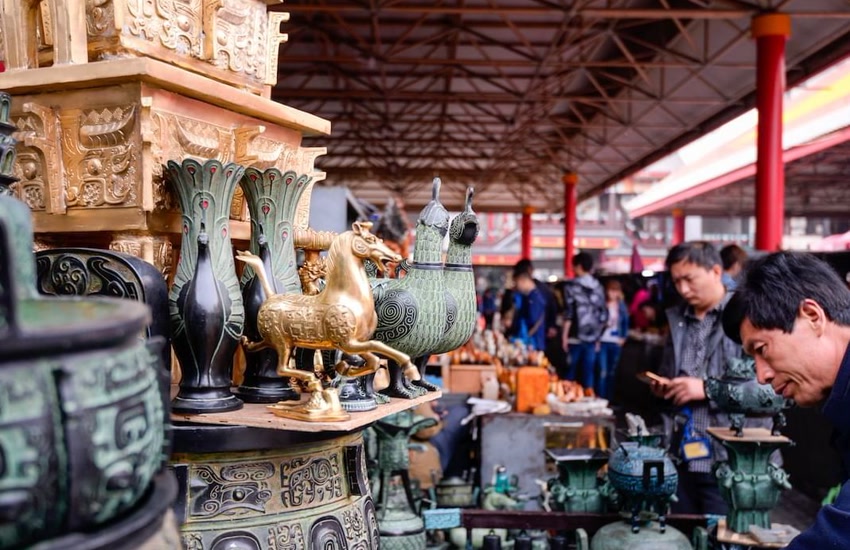
- Calligraphy, scrolls, Mao memorabilia, ceramics, jade, opera masks, vintage cameras
- Bargaining
- Start at 20-30% of asking price; cash + WeChat/Alipay accepted, no card readers
- Authenticity warning
- Most 'antiques' are reproductions; buy because you like the piece, not for investment
As of May 2026, last reviewed by an LTC editor.
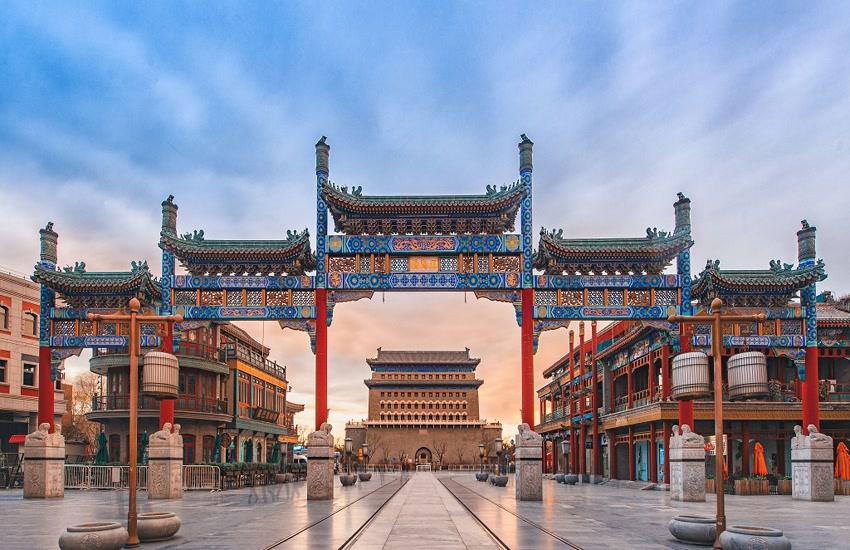
Panjiayuan (潘家园) is Asia’s largest antique and curio market — 48,500 m² in Beijing’s Chaoyang district with 3,000+ stalls selling everything from genuine Tang-dynasty ceramics to Cultural Revolution propaganda posters to hand-carved jade pendants to Mao-era pocket watches. For foreign visitors interested in Chinese material culture, vintage finds, or simply the bargaining theater of a serious flea market, Panjiayuan is one of Beijing’s most-distinctive cultural destinations. This guide covers what to find, how the market works, bargaining mechanics, and the practical foreign-visitor logistics.
What makes Panjiayuan unique
Panjiayuan is not a museum and not a shopping mall. It’s a 7-day-a-week working flea market where:
- Vendors come from across China — Tibet, Xinjiang, Mongolia, every Chinese province represented in regional crafts
- Authenticity ranges wildly — genuine antiques mixed with reproductions, sometimes side-by-side on the same stall
- Prices are entirely negotiable — almost nothing has a fixed price
- The serious collector market opens 04:30am (with flashlights) — the casual shopper market starts 08:30
- Weekend operation is intense (Sat-Sun); weekdays have ~30% of stall coverage
The 6 zones of Panjiayuan
The market is roughly organized into specialty areas:
- Antiques and curios — ceramics, scrolls, calligraphy, ancient coins, Buddhist sculpture
- Jade and stone — jade pendants, bracelets, carved stone seals, semi-precious gems
- Paintings and calligraphy — traditional Chinese ink paintings, contemporary scrolls, mounted calligraphy
- Religious and ethnic crafts — Tibetan Buddhist items, Mongolian silver, Hui Muslim handicrafts
- Mao era and Cultural Revolution memorabilia — pins, posters, books, statues, watches
- Vintage furniture and home goods — small wooden furniture, lamps, vintage ceramics
What to find at Panjiayuan
Strong buys
- Calligraphy brushes + ink stones: portable, packable, authentic. ¥30-300.
- Hand-carved name seals (chops): get your name carved in Chinese characters. ¥80-300. Excellent souvenir.
- Mao era pins + memorabilia: small, light, culturally significant. ¥10-300 per item.
- Tibetan Buddhist beads + prayer wheels: distinctive crafts. ¥50-500.
- Small jade ornaments (with quality verification): wearable, packable, culturally significant. ¥100-2,000.
- Chinese tea sets: small yixing clay teapots, ceramic cups. ¥80-500.
- Vintage Chinese books + atlases: pre-1980 materials with historical resonance. ¥50-500.
- Cantonese folk art + paper-cutting: framed paper-cuts. ¥50-300.
Buyer beware
- “Antiques” sold as genuine when they’re 1990s reproductions — common across the market
- “Ancient jade” without certification — most pieces are modern
- Ivory or animal-product items — banned for export from China; do not buy
- “Bronze Buddhas” — quality reproductions sometimes sold as genuine Tang-Song era; rarely are
- Calligraphy by “famous masters” — fake signatures common; buy contemporary unsigned pieces for honest value
Bargaining mechanics
Panjiayuan operates on aggressive bargaining. The opening price quoted to foreigners is typically 5-15× the final agreed price. The rules:
- Open with 10-15% of asking: if the vendor says ¥1,000, your counter is ¥100-150.
- Use a calculator app: type numbers back and forth — no language friction.
- Be willing to walk away: 80% of the time the vendor will chase you with a lower offer.
- Bundle 2-3 items: “If I take all three, what’s the price?” — reliably drops per-unit cost 30-40%.
- Show calm interest: don’t broadcast excitement; vendors increase prices when they sense desire.
- Cash advantage: small-denomination cash sometimes beats mobile-pay; vendors prefer cash for certain items.
- Final agreed price: 15-25% of opening at the touristy stalls; better deals on Tuesdays-Thursdays when foot traffic is lower.
Timing your visit
- Weekend (Saturday-Sunday): full stall coverage, biggest selection, crowded. Best for first-time visitors who want to see everything.
- Weekday (Tuesday-Friday): ~30% of stalls open; less crowded; better bargaining leverage; smaller selection.
- Pre-dawn (04:30-07:00 Saturdays): serious collector hour with flashlights. The deepest deals are made here. Vendors clearing previous-week inventory. Foreign visitors who do this get a different experience entirely.
- Mid-morning (08:30-11:30): peak foreign-visitor + casual-shopper crowd.
- Afternoon (14:00-17:00): some vendors pack up early. Discounted closeout prices possible if you find motivated sellers.
How to evaluate authenticity
For most items, authenticity is uncertain. Three categories of approach:
- Buy reproductions knowingly: most items are 1990s+ reproductions; buy them as decorative pieces at appropriate prices (¥50-500 range)
- Skip claimed-antiques: unless you’re a serious collector with provenance verification skills, treat all “antique” claims with skepticism
- Hire a specialist: for serious purchases (¥10,000+), hire a Beijing-based antique specialist for authentication. Cost: ¥1,000-3,000 per appraisal.
Logistics for foreign visitors
- Address + transport: 18 Huawei Road, Chaoyang District. Take Metro Line 10 to Panjiayuan station, walk 5 min. Alternative: DiDi from anywhere in central Beijing for ¥25-50.
- Opening hours: Weekend 04:30 (with lights) – 18:00; Weekday 08:30 – 16:30.
- Entry fee: free.
- Payment: WeChat Pay + Alipay universal; cash works at all stalls; credit cards rare.
- Shipping: most stalls can arrange domestic Chinese shipping (¥20-200). International shipping via DHL/UPS sometimes available; verify before paying. Customs duties may apply at destination country.
- Language: some vendors speak basic English (especially in the tourist-favored zones). Mandarin or pointing + calculator works universally.
- Restroom: located at the south end of the market; cleaner than typical Chinese flea-market facilities.
- Food: small food stalls on the east edge; basic Chinese street food.
What to bring
- Comfortable shoes: 2-3 hours of walking is typical
- Cash (¥500-1,500 in small denominations)
- Reusable bag: most stalls don’t provide bags
- Bottle of water: especially in summer
- Smartphone with calculator + Pleco translator
- Passport: sometimes asked for VAT-receipt purposes on larger purchases
- Sun protection: summer outdoor sections get hot
- Patience: bargaining takes time; expect 5-15 min per transaction
Comparing Panjiayuan to other Beijing markets
- Silk Street (Xiushui): indoor mall; foreign-tourist-targeted; counterfeit luxury goods + tailored clothes. Different category from Panjiayuan.
- Pearl Market (Hongqiao): indoor; jewelry-focused; less antique/curio variety.
- Liulichang: traditional calligraphy + brush + ink street; higher quality + less bargaining; better for souvenirs.
- Maliandao Tea Street: tea wholesale; not antique-focused but excellent for tea purchases.
Practical tips for foreigners
- Dress down: visible wealth attracts higher prices.
- Visit with a Chinese-speaking friend: dramatically improves bargaining outcomes; vendors offer different opening prices.
- Bring a printed photo of any specific item you’re hunting: dramatically helps the search.
- Don’t show photos of similar items you’ve seen at other stalls: vendors will adjust prices upward.
- Customs and shipping: research your home country’s import rules before buying genuinely-old items (some require permits).
- Save receipts (fapiao): ask for them on significant purchases for export documentation.