
- UNESCO status
- The Great Wall of China inscribed 1987
- Wild/unrestored sections
- Jiankou, Gubeikou, Jiumenkou — challenging hiking, no tickets at most
- Restored but quiet
- Jinshanling, Simatai (night-walks), Huanghuacheng (lakeside)
- Crowded to avoid
- Badaling (most visited, ¥40) — bus tours dominate; visit pre-08:00 or skip
- Best season for hiking
- April-May and September-October — avoid summer storms, winter ice
As of May 2026, last reviewed by an LTC editor.
The Great Wall is 21,196 km long, spread across 15 provinces, and built by every major dynasty from the Qin (221 BCE) to the Ming (1644). Yet most foreign visitors see one section — the heavily-restored, Beijing-adjacent Badaling — and call it done. The lesser-trodden sections offer something Badaling can’t: the original Ming-era stonework, dramatic ridge-walking, near-empty trails, and the chance to see the Wall as the centuries of wind, frost, and grass have actually left it. This guide covers the 6 alternative sections worth the detour and the practical logistics for visiting them.
Why go beyond Badaling
Badaling is 70 km from central Beijing, opened to tourism in 1957, and sees 10 million visitors per year. The original Ming wall has been heavily reconstructed; visitor infrastructure includes paved paths, handrails, gondolas, and gift shops. It’s an excellent first-timer’s Great Wall — but the experience is also crowded, manicured, and curated.
The alternative sections show the Wall in three meaningfully different states:
- Restored but quieter: Mutianyu, Jinshanling-west — fully walkable, cable-car-accessible, fraction of Badaling’s crowds.
- Partially restored: Jiankou, Jinshanling-east, Gubeikou — original Ming stones with selective repair work.
- Wild and unrestored: Jiankou’s outer sections, Simatai, Huanghuacheng — original Ming construction degraded by 500 years of weather.
The 6 less-trodden sections
1. Mutianyu (慕田峪) — the popular alternative
Located 70 km northeast of Beijing. Mutianyu is the secondary Great Wall section that’s still tourist-infrastructure-developed (cable car, toboggan slide, English signage) but receives ~25% of Badaling’s foot traffic. 22 watchtowers across a 2-km walkable section, with original Ming architecture. Best balance of accessibility + atmosphere for first-timers who want to skip Badaling crowds. Allow 4-5 hours total including transport. ¥45 entry + ¥80 round-trip cable car. 1-hour bus ride from Beijing’s Dongzhimen station, or hire a car (~¥500/day).
2. Jinshanling (金山岭) — the photographer’s choice
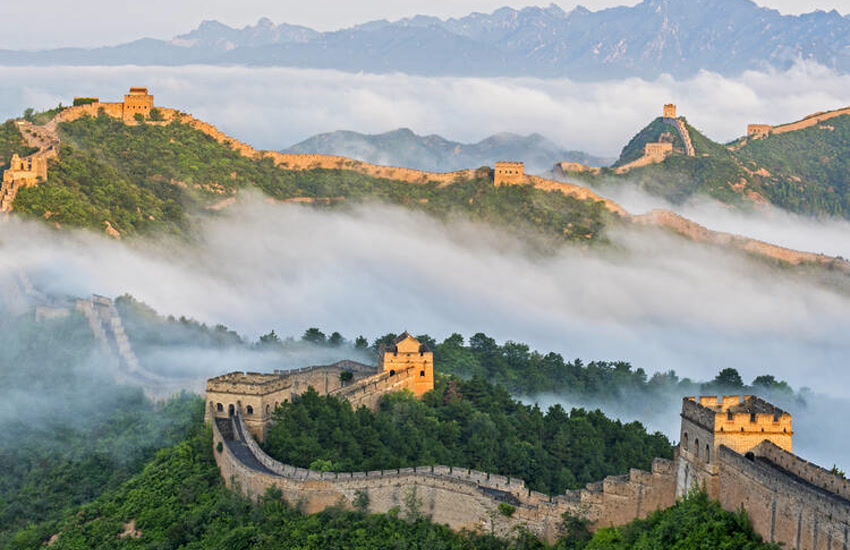
Located 150 km northeast of Beijing in the Hebei province border zone. Jinshanling is considered by Wall photographers as the single most photogenic section — long ridge walks, dramatic watchtowers, partial restoration leaving the original stonework visible. The 10 km section from Jinshanling to Simatai is the classic “ridgewalk” experience but currently the eastern part connects to a separately-ticketed Simatai zone. Allow 6-8 hours for the day trip. ¥65 entry. Reachable by tour bus from Beijing or hired car. Less crowded than Mutianyu; expect mostly photographers and hardcore hikers.
3. Jiankou (箭扣) — the wild section
Located 80 km north of Beijing. Jiankou is one of the most-photographed wild sections — steep, unrestored, dramatic ridge sections with watchtowers crumbling at angles. Technically the “Arrow Knock” section, named for its bow-and-arrow-shaped curves. Most photos labeled “wild Great Wall” actually show Jiankou. Best for experienced hikers — sections require scrambling, no handrails, no medical access. The classic Jiankou-to-Mutianyu hike is 4-5 hours one-way. ¥20 entry. NOT for casual visitors. Local guide strongly recommended.
4. Gubeikou (古北口) — the historical section
Located 150 km northeast of Beijing. The Gubeikou section was a major military pass — battles fought here from the Ming dynasty through 1933’s resistance against Japanese forces. Partially restored, low crowds. Historic atmosphere strong: you can see the wall’s military-strategy function more clearly here than at decorative sections. ¥25 entry. Pair with the adjacent Simatai section for a 2-day Wall hiking trip.
5. Simatai (司马台) — the night-Wall section
Located 130 km northeast of Beijing. The only Great Wall section that permits night visits (with permit). Wukoufang section illuminated after dark. Simatai’s “single-row” wall section is the narrowest stretch of original Wall — once a defensive feature, now a heart-stopping walking experience. Adjacent Gubei Water Town is a Ming-era reconstructed water town worth combining for a 2-day visit. ¥40 entry; night permit additional. The Gubei Water Town + Simatai night-Wall combo is one of the more-unique Wall experiences available.
6. Huanghuacheng (黄花城) — the water Great Wall
Located 60 km north of Beijing. The “yellow flower” section partially submerged in a reservoir — the only Wall section where water meets stone. Wall sections rise from the reservoir, climb the surrounding hills, and present an unusual visual not found anywhere else. Restored portions are walkable; submerged portions visible from boats. ¥45 entry. Half-day trip from Beijing. Less photographed than Jiankou but unique in its own right.
Wall sections farther afield (worth knowing)
- Shanhaiguan (Hebei) — the easternmost end of the Wall, where it meets the Bohai Sea. “First Pass Under Heaven” gate.
- Jiayuguan (Gansu) — the westernmost Wall fort, in the Gobi-edge desert. The “Last Pass Under Heaven” — the spiritual western terminus.
- Datong (Shanxi) — multiple Wall sections plus the Hanging Monastery and Yungang Grottoes for a multi-attraction long-weekend.
- Jinshan-style Hebei sections — beyond Jinshanling proper, the Hebei sections are mostly unrestored and rarely visited by foreigners.
How to choose your section
- First-time visitor, limited time, want a clean photo: Mutianyu. 1 day from Beijing.
- Photographer, want the iconic ridge shots: Jinshanling. 1 long day or 2 days from Beijing.
- Experienced hiker, want the wild experience: Jiankou. With a guide. Full day.
- History-oriented visitor: Gubeikou. Quieter and more contextual.
- Want something unique: Simatai night Wall + Gubei Water Town. 2-day trip.
- Want the unusual visual: Huanghuacheng water Wall. Half-day.
Best season for the Great Wall
- September-October: peak — clear skies, comfortable temperatures, autumn foliage on surrounding hills. Most photogenic season.
- April-May: spring — mild, occasional dust, pre-summer crowds.
- July-August: hot, humid, thunderstorms; crowded with domestic tourists.
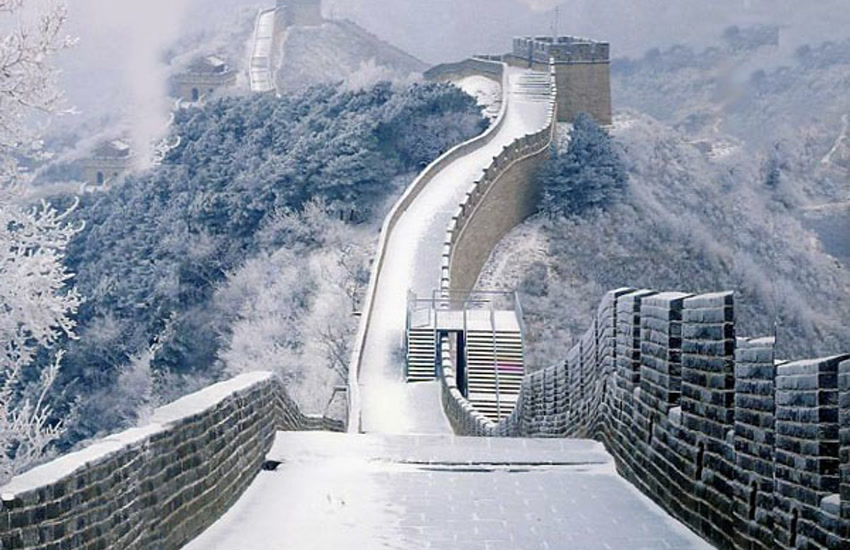
- November-March: cold (-5 to -15°C) but stunning when snow-covered. Some sections close during heavy snow.
Practical logistics for foreign visitors
- Getting there: most sections accessible by tour bus from Beijing (¥80-200 round-trip), hired car with driver (¥500-900/day, more flexible), or public bus (cheaper but slow and language-friction-heavy). For Jiankou and remote sections, hired car is the only practical option.
- Tour operators: Beijing has dozens of foreign-friendly Great Wall day-trip operators. Mutianyu day trips ~¥300 per person; Jinshanling ~¥400-500; private guide options ~¥800-1,500.
- Equipment: comfortable broken-in shoes (not new!), water (2L+ in summer), sun protection, layered clothing, gloves for winter Wall visits.
- Difficulty levels: Mutianyu sections vary — flat segments to 800-step climbs. Jiankou requires scrambling and balance. Jinshanling has long ridge walks but no scrambling. Choose based on fitness honestly.
- Cable cars / toboggans: Mutianyu has both up and down options; toboggan slide is one of the more-fun Wall descents.
- Photography tips: morning light (07:00-10:00) and golden hour (16:30-18:00) are best. Tripods allowed at most sections.
- Mobile signal: 4G/5G works at most accessible sections. Remote Jiankou areas may have spotty signal — download offline maps before visiting.
Wall etiquette
- Don’t remove stones — illegal and damages heritage. Some sections have signage about historical theft.
- Don’t carve names or graffiti — currently a punishable offense in protected sections.
- Stay on the marked path at restored sections; at wild sections like Jiankou, follow your guide’s footprint exactly to avoid unstable masonry.
- Carry out trash — receptacles are limited; pack out what you bring in.
- Drone permits — drones generally prohibited near the Wall without permit. Don’t risk it.