
As of 2026, the situation for health insurance for foreigners in China is defined by a strict division between the state-managed public system and the international private market. Foreign nationals residing in mainland China must navigate a regulatory framework where visa status determines eligibility for the Urban Employee Basic Medical Insurance (UEBMI). While mandatory for those on work permits, the public system often requires supplementation for those seeking Western standards of care. This guide clarifies the mandatory contribution rules, the costs of international premiums, and the practicalities of accessing medical treatment across China’s tiered hospital hierarchy.
What are the essential health insurance facts for 2026?
- Mandatory System: UEBMI (Urban Employee Basic Medical Insurance) for all Z-visa workers.
- Legal Authority: Order No. 16, Ministry of Human Resources and Social Security (2011).
- Enrolment Window: Employers must register foreign staff within 30 days of permit processing.
- Premium Range: International plans typically cost $2,000 to $8,000 (¥14,500 to ¥58,000) annually.
- Public Hospital Tier: Grade 3A (Sanjia) hospitals are the standard for public insurance coverage.
- Private Networks: United Family, Parkway, and Raffles offer direct billing for global carriers.
- Contribution Rates: Employees pay 2% of gross salary; employers pay between 6% and 10%.
- Unified Card: The ‘Join in Card’ integrates social security and work permit data as of late 2024.
Who is required to enrol in the Chinese public insurance system?
Foreign employees working under a legal Z-visa or holding a Permanent Residence Permit are mandatorily required to participate in the Chinese social insurance system. This requirement is anchored in the ‘Interim Measures for the Participation in Social Insurance of Foreigners Employed in China’, a decree often referenced as Order No. 16 of 2011. Employers are legally obligated to register foreign staff for five types of coverage: pension, medical, work-related injury, unemployment, and maternity. This process is a fundamental part of Chinese business culture and the role of Guanxi that every long-term resident must understand to remain compliant with local labour laws.
The insurance mandate triggers once employment formally begins on mainland soil. It is a common point of confusion for new arrivals that the Z-visa application requires a physical health certificate; however, this certificate is a measure of fitness for entry and does not substitute for medical insurance. This mandatory resident coverage stands in contrast to travel insurance for short trips through China, which is designed for tourists and does not meet the legal requirements for those with local employment contracts. Employers who fail to register their foreign staff within the 30-day window following the issuance of the work permit face administrative penalties and are liable for any medical costs incurred by the employee during the lapse.
Mandatory contributions are deducted directly from the monthly gross salary. These rates vary by municipality based on local economic data. In Beijing for the 2025–2026 period, the monthly contribution base is capped at a ceiling of ¥35,811 (about $4,945) and a floor of ¥7,162 (about $988). Even if a monthly salary meaningfully exceeds this ceiling, the premium is calculated only up to the maximum threshold. Exemptions are rare and apply only to citizens of countries with bilateral social security agreements, such as Germany, South Korea, Canada, Japan, and the Netherlands. Most of these treaties only cover pension components, meaning medical contributions remain mandatory for nearly all foreign professionals.
How does the public UEBMI system function for foreign employees?
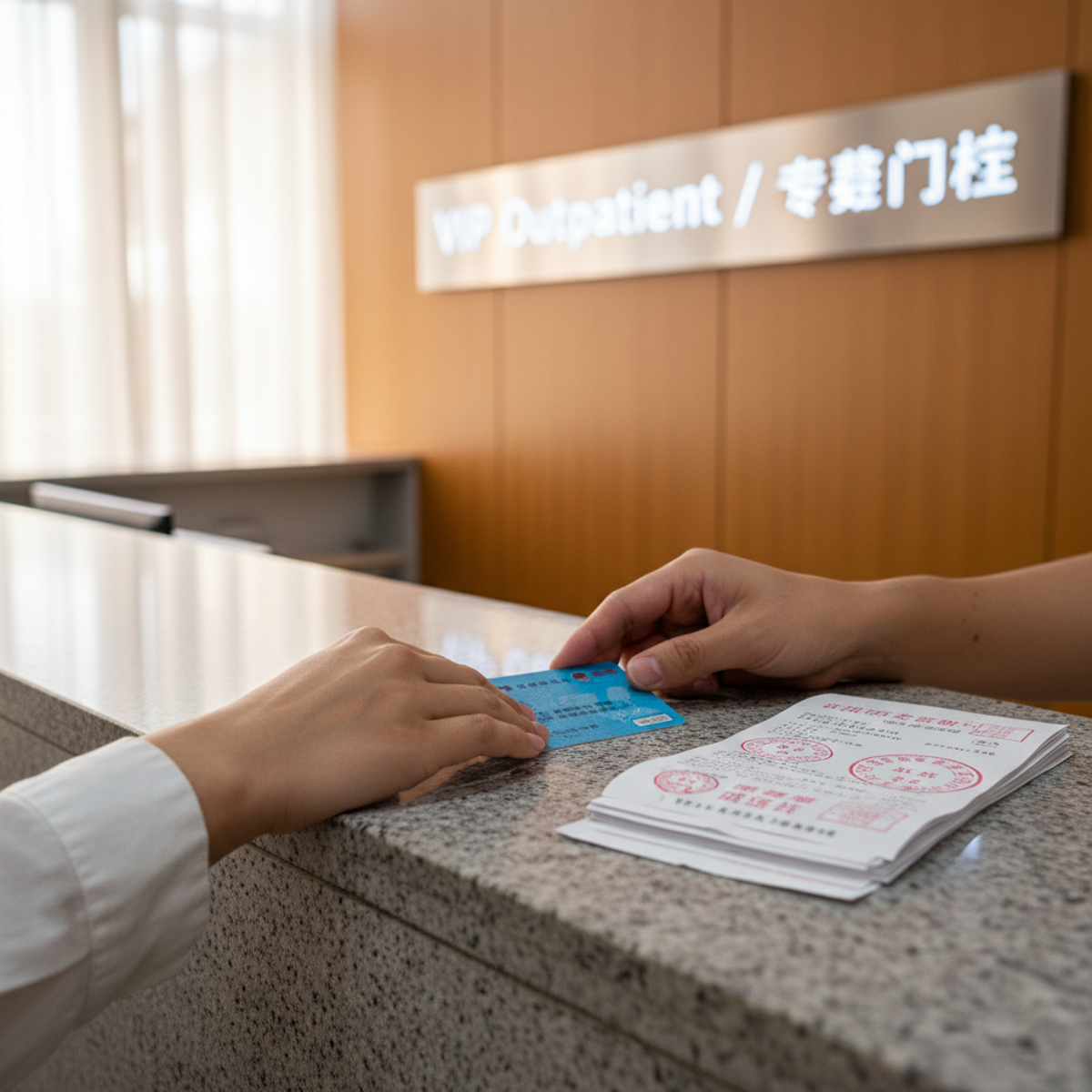
The Urban Employee Basic Medical Insurance operates as a dual-account system. The personal account, funded by the 2% employee contribution, acts as a digital wallet for outpatient expenses and pharmacy purchases. The larger collective fund, supported by the employer’s 6% to 10% contribution, is reserved for hospitalisation and major inpatient treatments. To access these funds, foreigners must present their Social Security Card. Effective December 1, 2024, the Ministry of Human Resources and Social Security began issuing the ‘Join in Card’, which functions as both a work permit and a social security identifier in physical and digital formats.
Utilising these public facilities requires navigating the Chinese hospital hierarchy. Public insurance is generally only accepted at government-run facilities, specifically Grade 3A (Sanjia) hospitals. In these environments, business culture and Guanxi for foreigners helps provide social context when dealing with the administrative bureaucracy of large state institutions. While 3A hospitals house the country’s most advanced medical technology, they are frequently crowded, and patient privacy standards may differ from Western expectations. English-speaking staff are typically concentrated in ‘International Departments’ (guoji bu) or ‘VIP Wards’ (gaogan bingfang), where consultation fees are higher and may exceed standard UEBMI reimbursement caps, often ranging from ¥500 to ¥1,200 (about $69 to $166) per visit.
Coverage is also geographically restricted by the Hukou (residence registration) system, which ties insurance to the city of enrolment. A foreigner registered in Shanghai may find that their card does not offer direct billing in a Guangzhou hospital for routine care. While an ‘inter-provincial settlement’ programme exists for emergency hospitalisation, routine outpatient visits often require the patient to pay upfront and seek manual reimbursement later. For residents requiring travel between provinces for specialised care, HSR and long-distance train travel in China provides the most efficient means of reaching Tier 1 medical hubs like Beijing or Shanghai where the most sophisticated 3A facilities are located.
Why should foreign residents consider international private health insurance?
The primary driver for purchasing international health insurance is the desire to access the private hospital market, which operates independently of the state system. Facilities such as the United Family Healthcare (UFH) network, ParkwayHealth, and Raffles Medical provide Western-standard care with bilingual medical staff. Beijing United Family Hospital (BJU), for example, was the first in China to receive Joint Commission International (JCI) accreditation in 2005. These hospitals offer substantially shorter waiting times and allow for appointment bookings via English-language interfaces or WeChat mini-programmes. A standard consultation at these facilities typically starts at ¥800 to ¥1,500 (about $110 to $207), a cost that is rarely covered by the public UEBMI.
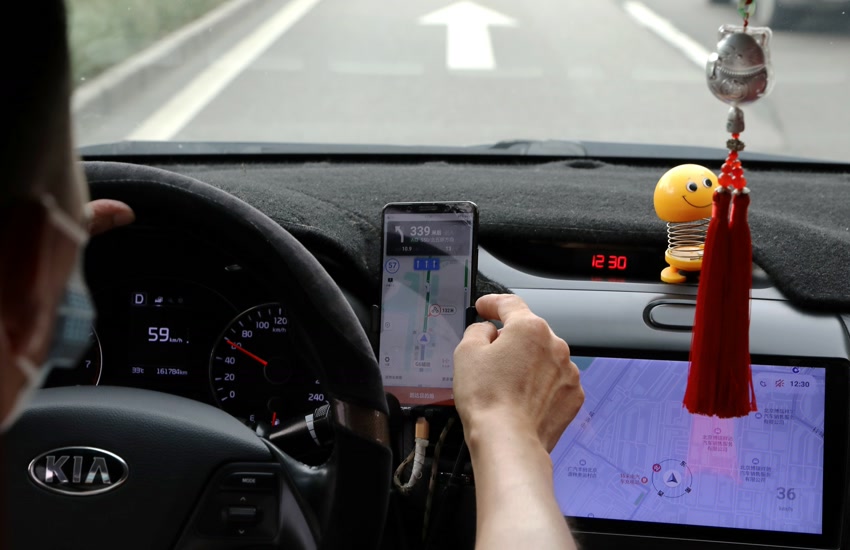
A load-bearing advantage of private coverage is the ‘direct billing’ network. Leading global carriers, including Cigna Global, Allianz Care, AXA – Global Healthcare, and Bupa Global, have established agreements with hundreds of private clinics and hospitals. This allows the medical facility to settle the bill directly with the insurer, sparing the patient from paying large sums upfront. This is particularly vital for diagnostic procedures; an MRI in an international clinic can cost between ¥6,000 and ¥12,000 (about $830 to $1,660). In an emergency, using the Didi app for transport in Chinese cities is the fastest way to reach a private emergency room, as public ambulances often default to the nearest state-run facility regardless of the patient’s insurance status.
Private plans also fill the ‘National Drug List’ gap. The public system covers only medications approved by the state, which can exclude the newest imported Western pharmaceuticals or specialised cancer treatments. International plans typically cover these imports, alongside medical evacuation and repatriation services, which are critical for those living outside the major Tier 1 hubs. For expatriate families, these plans are often the only practical solution for covering non-working spouses and children, as the mandatory UEBMI is strictly tied to the individual foreign employee’s contract and does not automatically extend to dependents on S1 or S2 visas.
How do premiums and coverage compare between local and global carriers?
Foreigners must choose between local private insurance from Chinese firms like Ping An, China Life, or Taikang, and global carriers offering expat-specific policies. Local carriers have expanded their high-end offerings, such as the Ping An ‘Yixiang’ series. These plans provide access to international hospitals at a price point roughly 20% to 30% lower than global firms because they often restrict coverage to mainland China or Greater China. These plans are increasingly digital-first; the Ping An Health app now includes ‘AskBob’, an AI healthcare assistant that utilises a database of 38 million medical journals to assist in doctor matching and risk detection.
Global carriers like Cigna Global or Allianz Care offer portability, which is a priority for digital nomads. A Cigna ‘Platinum’ plan remains valid if a resident moves from Shanghai to Singapore or London, whereas a local Ping An plan is generally terminated upon the cancellation of a China residence permit. Allianz Care provides tiered options such as Compass Care, with an annual limit of ¥8,000,000 (about $1.1 million), and Compass Plus, which extends limits to ¥26,000,000 (about $3.6 million). The cost of these premiums is determined by age, chosen deductibles, and the ‘Area of Cover’. Including ‘High-Cost Providers’ like United Family can increase a premium by approximately 30% due to the higher consultation fees at those specific facilities.
| Plan Type | Typical Annual Premium (USD) | Primary Network | Key Benefit |
|---|---|---|---|
| Local Private (Ping An) | $1,500 – $4,000 | China private/public | Competitive cost; AskBob AI |
| Global Mid-Tier (AXA) | $3,500 – $6,500 | Worldwide (excl. USA) | Portability; evacuation cover |
| Global Premium (Bupa) | $6,500 – $12,000+ | Worldwide (incl. USA) | Full direct billing; high limits |
While local plans are cost-effective, global carriers typically provide 24/7 multilingual helplines based outside of mainland China. This ensures that even during local network slowdowns or public holidays, residents can reach a support team to issue a Guarantee of Payment (GOP) for hospital admission. Furthermore, global plans are more likely to offer ‘lifetime renewability’, ensuring that coverage is not cancelled due to a chronic condition developed during the policy period.
How can digital nomads and family-visa holders navigate medical care?
Digital nomads and those on S1, S2, or X visas do not qualify for the mandatory UEBMI system because they lack a local employment contract. Consequently, these individuals must secure their own private health insurance to avoid high out-of-pocket costs at international clinics. Students are usually provided with a basic medical protection scheme through Ping An, which covers accidental disability and hospitalisation, but these schemes often carry a ¥650 (about $90) deductible and provide limited outpatient benefits. Understanding these gaps is a key part of planning health-insurance coverage alongside your VPN and connectivity setup successfully, as an uninsured hospital stay can quickly deplete a savings account.
For the nomad population, maintaining digital access to insurance portals is a constant concern. Accessing member areas or telehealth services often requires a reliable VPN setup for foreigners in China to bypass regional connection filters. Many international insurers host their claim portals on servers located in Europe or the United States, which can be slow to load behind the Great Firewall. Without a stable connection, a resident may struggle to download their digital insurance card or submit a claim during an urgent medical situation. This digital friction makes direct billing even more essential, as it reduces the need to upload multiple receipts and invoices to a remote server.
For those on family visas, maternity coverage is the most significant financial variable. Most international plans impose a ‘waiting period’ of 10 to 12 months before maternity benefits become active. If a resident arrives in China while already pregnant, finding coverage for delivery at an international hospital is nearly impossible, as the pregnancy is considered a pre-existing condition. Out-of-pocket costs for a standard delivery at a private facility in Shanghai or Beijing can exceed ¥60,000 to ¥100,000 (about $8,300 to $13,800), making pre-arrival planning essential for families. For those who must use the public system for maternity, costs are significantly lower—often under ¥15,000 (about $2,000)—but require a high level of Mandarin proficiency to navigate the registration and prenatal testing protocols.
Further reading
- Expat Participation in China’s Social Insurance System — China Briefing, April 2024
- Health and Medical Insurance in China 2025 Guide — First Aid China, December 2024
- International Health Insurance for Expats in China — Pacific Prime, January 2025
- Relevant Services for Working in China: Social Insurance — Beijing Municipal Government, April 2024
- International Health Insurance for China — Allianz Care, January 2026
Related on this site: