
- EBC Tibet elevation
- 5,150 m / 16,900 ft (north side, China) — accessible by road
- EBC Nepal elevation
- 5,364 m / 17,600 ft (south side) — multi-day trek required
- Tibet access
- Foreign visitors need Tibet Travel Permit + group tour booking + Chinese visa
- Best season
- April-May, September-October; winter access limited by snow
- Acclimatisation
- Spend 2-3 days at 3,500-4,000 m first; Diamox available, consult physician
As of May 2026, last reviewed by an LTC editor.
Everest Base Camp is two different destinations depending on which side of the mountain you visit. The Nepal-side EBC (5,364 m, 17,598 ft) is a 12-14 day trek through Sherpa villages and high-altitude tea-house lodges — the iconic trekking experience. The Tibet-side EBC (5,200 m, 17,060 ft) is a vehicle-accessed viewpoint reachable by road from Lhasa — a different proposition, more accessible, with full Everest north-face views. This guide covers both routes, their elevations, the altitude considerations, and the practical foreign-visitor logistics.
The two Everest Base Camps — quick orientation
Everest sits on the China-Nepal border. Two “base camps” exist because climbers approach the peak from north (China/Tibet) or south (Nepal):
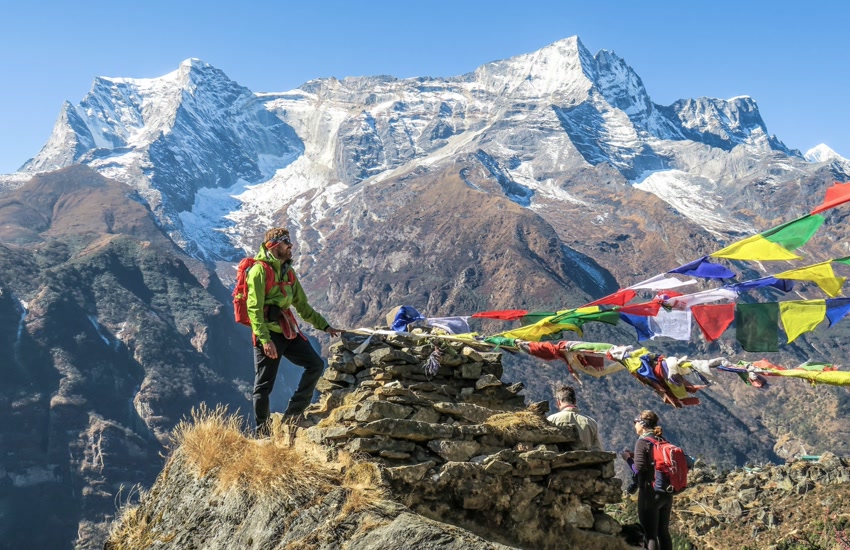
- South Base Camp (Nepal) — 5,364 m. Trekking destination. Located on the Khumbu Glacier. Reached on foot from Lukla after 8-10 day trek. Accommodation in Sherpa tea houses.
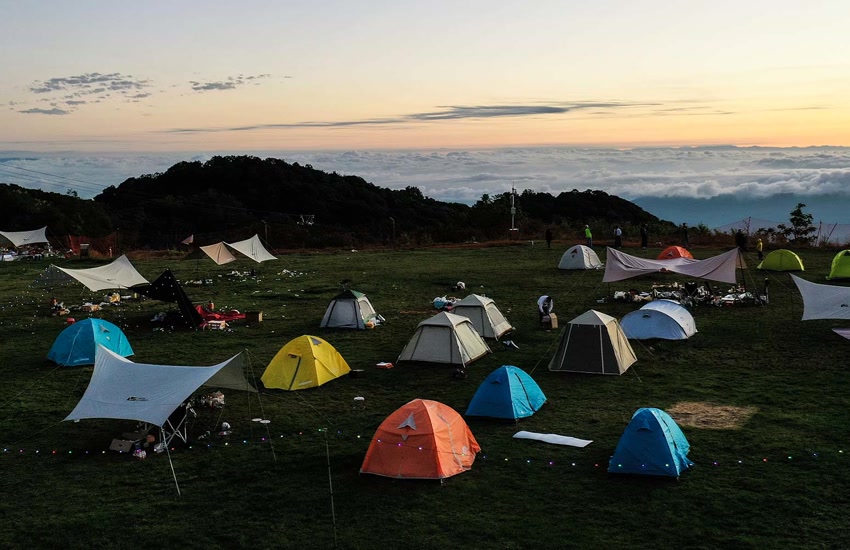
- North Base Camp (Tibet/China) — 5,200 m. Vehicle destination. Reached by Land Cruiser from Lhasa via Shigatse and Tingri. Accommodation in Tibetan-style tent camps or guesthouses in Rongbuk.
Both viewpoints offer mountain views, but the experiences differ fundamentally: Nepal-side is a 2-3 week trek with massive cultural immersion; Tibet-side is a 6-8 day overland trip with mostly vehicle travel and 1-2 nights at altitude.
Understanding the elevation
EBC elevation (~5,200-5,364 m) sits in the territory where altitude sickness affects ~75% of unacclimatized visitors. To put this in perspective:
- Lhasa (3,650 m) — already triggers symptoms in 25-50% of new arrivals.
- Cusco, Peru (3,400 m) — comparable to Lhasa.
- Aconcagua summit (6,961 m) — territory of severe AMS for any unacclimatized visitor.
- Everest summit (8,848 m) — death zone above 8,000 m; expedition climbers only.
EBC is at the upper edge of where unacclimatized leisure travel is reasonable. Pre-trip acclimatization (multiple days at intermediate elevations) is non-optional.
Nepal-side EBC — the classic trek
The 12-14 day round-trip trek from Lukla to EBC is one of the world’s iconic adventure routes. Highlights:
- Lukla flight — the white-knuckle 35-minute flight from Kathmandu to Tenzing-Hillary Airport, one of the world’s most challenging runways.
- Namche Bazaar (3,440 m) — Sherpa capital, acclimatization stop, lively market.
- Tengboche Monastery (3,867 m) — historic monastery with stunning Ama Dablam views.
- Lobuche (4,940 m) — last main settlement before EBC.
- Gorak Shep (5,164 m) — overnight base for EBC summit-day.
- Kala Patthar (5,545 m) — optional viewpoint above EBC; the iconic Everest photo spot.
Tea-house accommodation is rustic but reliable. Food is mostly carbohydrate-heavy (dal bhat, fried rice, momo). Wifi available at most lodges (¥50-200/hour). Cost: $1,200-3,500 USD all-in including flights, guide, porter, permits, food, accommodation.
Tibet-side EBC — the overland alternative
The Tibet-side EBC trip is run as a 5-7 day Land Cruiser expedition from Lhasa. Typical route:
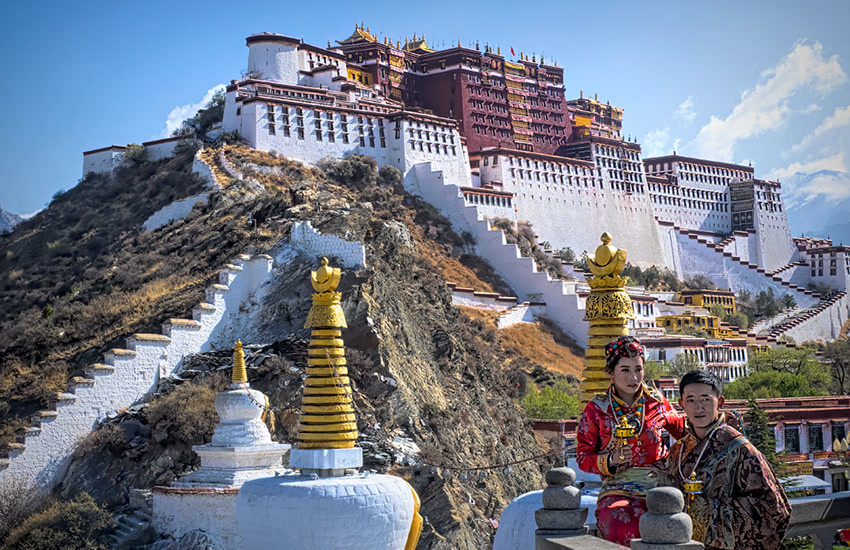
- Day 1-2: Lhasa acclimatization (Potala, Jokhang, Barkhor)
- Day 3: Lhasa → Shigatse (250 km, via Yamdrok Lake and Karola Glacier)
- Day 4: Shigatse → Tingri (350 km, via Sakya Monastery)
- Day 5: Tingri → Rongbuk Monastery → EBC viewpoint. Overnight at Rongbuk (5,000 m).
- Day 6: EBC sunrise → return drive to Shigatse
- Day 7: Shigatse → Lhasa
The Rongbuk Monastery is the world’s highest functioning monastery (5,000 m). The EBC viewpoint here offers an unobstructed north-face view of Everest — visually arguably more dramatic than Nepal-side because the peak is closer (~16 km vs ~17 km) and less obscured by intermediate ridges.
Cost: ¥8,000-15,000 per person for the Lhasa-EBC tour including permits, transport, hotels, and guide. Foreign visitors must book through licensed Tibetan tour operator (see our Lhasa permits guide).
Best season for either route
- Nepal-side: October-November (post-monsoon, clearest skies) is peak. April-May (pre-monsoon) is second-best. December-February is bitterly cold and most lodges close. June-September is monsoon — heavy rain, cloud-obscured views, leeches.
- Tibet-side: late April-October. May and September-October offer the clearest skies. Winter is closed.
Acclimatization strategy
For BOTH routes, gradual acclimatization is mandatory:
- Sleep elevation gain < 500 m per day above 3,000 m — the standard mountaineering rule.
- Acclimatization day every 1,000 m gained above 3,000 m — rest at intermediate altitude.
- Day-1 in Kathmandu (Nepal) or Lhasa (Tibet): rest, hydrate, eat light, avoid alcohol.
- Pulse oximeter — ¥150 cheap traveler device. Track SpO2 and heart rate daily; SpO2 below 80% or rapid heart-rate spike is a warning sign.
- Diamox — consult your doctor before departure. Many trekkers start 1-2 days pre-EBC arrival.
- Descend if symptoms worsen — the iron rule. Continued ascent with worsening symptoms causes HAPE or HACE, which are fatal if untreated.
Equipment essentials
- Layers: temperatures range from 15°C daytime to -20°C overnight at EBC.
- Sleeping bag rated to -20°C for Nepal-side (lodges have blankets but rooms are unheated).
- Down jacket, fleece, base layers, hardshell jacket.
- Sturdy hiking boots (broken in!) for Nepal-side. Tibet-side: comfortable walking shoes sufficient.
- Trekking poles — significantly reduce knee impact on descent.
- UV-blocking sunglasses — snow blindness is a real risk at altitude.
- 50+ SPF sunscreen + lip balm — sunburn at altitude is intense.
- Water purification for Nepal-side (LifeStraw or chlorine tablets). Tibet-side: bottled water sufficient.
- Power bank + headlamp — power in lodges is unreliable; charging often costs extra.
Permits and visa requirements
- Nepal-side: Nepal tourist visa (on arrival, $40 USD for 30 days). TIMS card and Sagarmatha National Park permit (~$50 USD total) arranged by trekking agency.
- Tibet-side: Chinese tourist visa + Tibet Travel Permit + Alien Travel Permit + Frontier Permit (EBC zone specifically). All arranged by Tibetan tour operator 15-30 days pre-arrival.
Practical considerations for foreigners
- Insurance: high-altitude trekking insurance with helicopter evacuation coverage is non-negotiable. Standard travel insurance excludes ≥5,000 m. Specialized providers (World Nomads, Global Rescue) cover this.
- Fitness: cardiovascular fitness matters more than raw strength. 6+ months of regular cardio (hiking, running, cycling) before attempting either route.
- Mental preparation: cold, fatigue, and altitude-induced sleep disruption affect mood. Group trekking helps.
- Connectivity: limited but real. Both routes have intermittent mobile + wifi. Don’t rely on it.
- Pre-existing conditions: heart disease, severe asthma, sickle cell, recent surgery — consult your doctor. Some are absolute contraindications.