
- UNESCO status
- Mount Emei Scenic Area + Leshan Giant Buddha (1996)
- Leshan Giant Buddha
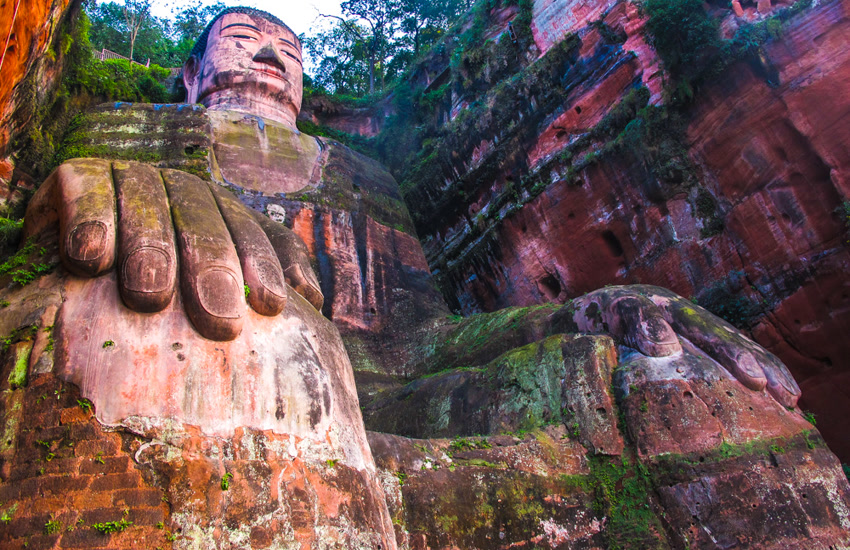
- 71m tall — world's largest stone-carved Buddha (Tang dynasty, 713 CE)
- Entry cost
- ¥80; combine with boat-view tour ¥70 or scenic-area shuttle
- Mt Emei
- 3,099m — Buddhist sacred mountain, monasteries, sunrise from Golden Summit
- Access
- High-speed rail from Chengdu, 1 hr
As of May 2026, last reviewed by an LTC editor.
Leshan (乐山) is a small city in Sichuan province best known for the Leshan Giant Buddha — the world’s largest stone-carved Buddha, 71 meters tall, carved into a cliff face between 713 and 803 CE. The site, a UNESCO World Heritage along with adjacent Mount Emei, draws foreign visitors as one of southwestern China’s most-distinctive cultural attractions. This guide covers the Giant Buddha visit, the adjacent Mount Emei pilgrimage, the practical logistics, and what makes Leshan worth a 1-2 day detour from Chengdu.
The Leshan Giant Buddha
The statue depicts Maitreya Buddha and sits at the confluence of the Min, Dadu, and Qingyi rivers. Construction began in 713 CE under monk Haitong’s leadership, who hoped that creating the massive Buddha would calm the dangerous river currents. The project took 90 years to complete; Haitong died before its completion. Ironically, the rock-cutting for the statue created drift in the rivers that did indeed calm the currents — the engineering byproduct, not the spiritual intention, solved the original problem.
Statue dimensions to know:
- Height: 71 m
- Shoulders: 28 m wide
- Eyes: 3.3 m wide
- Ears: 7 m long
- Feet: 8.5 m long (100 people can stand on one foot)
- Toenails: large enough to seat several people
The drainage system designed into the Buddha (hidden in the head, ears, and chest) protects the statue from erosion and is considered an engineering marvel for its era.
Visiting the Giant Buddha
Two ways to view
- From below (boat tour): 30-minute boat trip from the docks. Best for the iconic front-on view. ¥70 per person.
- From above (walking path): ¥80 entry to the scenic area. 1-2 hour walk along the cliff path with multiple vantage points. The “Buddha’s Foot” platform allows close inspection. The descent stairs are steep — over 200 steps.
Combined experience (boat + walking) takes 4-5 hours. Foreign visitors should do both — they offer completely different perspectives.
Best timing
- Morning (08:30-11:00): best light for photography from the boat; fewer crowds
- Afternoon (14:00-17:00): more crowded; light for the walking path
- Sunset (17:30-19:00 summer): golden light on the statue; spectacular if weather cooperates
Seasonal considerations
- March-May: comfortable temperatures, clear views, good for photography
- June-August: humid, frequent thunderstorms, river levels high (some river-level boat operations restricted)
- September-November: comfortable, clear, autumn-color hills
- December-February: cold (5-15°C), occasional fog limits visibility, fewer crowds
Combining Leshan with Mount Emei
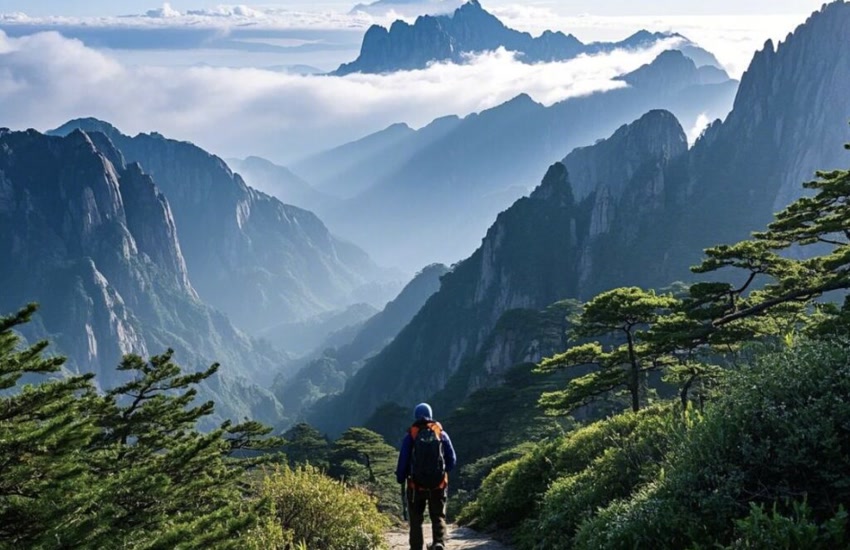
Mount Emei (峨眉山) is 30 km west of Leshan — China’s most sacred Buddhist mountain (one of the Four Sacred Buddhist Mountains). The two attractions are typically combined as a 2-day trip from Chengdu. Mount Emei’s highlights:
- Golden Summit (Jin Ding) — 3,099 m peak with the iconic golden Buddha statue. Accessible by cable car + walking.
- Wannian Temple — Tang-dynasty temple with bronze Buddha
- Sea of Clouds (Yunhai) — frequent atmospheric phenomenon, especially after rain
- Monkeys — wild Tibetan macaques throughout the mountain (occasionally aggressive about food)
- Pilgrimage route — multi-day climbing route used by Buddhist pilgrims for 1,500+ years
2-day combined itinerary:
- Day 1: Train from Chengdu to Emeishan (1.5 hr). Take bus + cable car to Golden Summit. Sunset and sunrise from the summit hotel.
- Day 2: Drive to Leshan (1 hour). Boat tour of Giant Buddha. Walking path. Return to Chengdu by evening (1-2 hour drive).
The Leshan area
Outside the Giant Buddha, Leshan is a low-rise Chinese city with limited foreign-tourist infrastructure. Walking the old town along the rivers is pleasant. Local Sichuan cuisine is excellent and inexpensive. The Wuyou Temple (combining Buddhist + Daoist + Confucian elements) and the surrounding cliff statues are worth a half-day side visit.
What to know about Sichuan / Leshan cuisine
- Mapo dofu — signature spicy tofu dish; Leshan version is bold
- Mala (numbing-spicy) — Sichuan peppercorn-driven; bring water
- Tea-smoked duck — Sichuan specialty served at higher-end venues
- Bowl-bowl chicken (碗碗鸡) — Leshan specialty: cold spicy chicken served in small bowls
- Rabbit-head (兔头) — local delicacy; Leshan is one of the cities where it’s a serious culinary tradition
- Sichuan hotpot — universal across Sichuan; mala broth is the regional standard
Practical logistics
- Getting there: high-speed rail from Chengdu (1 hour to Leshan, ¥55). Local buses or taxis to the Giant Buddha scenic area (¥30 by taxi from station).
- From Mount Emei: 30 min drive or local bus.
- Entry fee: ¥80 to the Leshan Giant Buddha scenic area; ¥70 additional for the boat tour.
- Time required: 4-5 hours for the Giant Buddha alone; 2 days for the full Leshan + Emei combo.
- Accommodation: Leshan city has mid-tier domestic chains (Hanting, 7 Days Inn) ¥150-300/night; international chains (Vienna, Crowne Plaza) ¥400-800/night. Mount Emei has mountaintop hotels for sunrise access.
- Payment: Alipay International + WeChat Pay universal. Cash works.
- Language: limited English signage. Pleco translator essential.
- Visa: standard Chinese tourist visa; no special permits.
What to avoid
- Mid-day weekend crowds: Leshan Giant Buddha gets very crowded weekend afternoons. Arrive early morning or late afternoon weekdays.
- Cliff path descent in rain: stairs become slippery; consider boat-only option in heavy rain.
- “Tour guides” approaching foreigners at scenic-area entrance: most legitimate guide services are arranged through official channels. Unsolicited offers are often expensive packages.
- Wildlife feeding at Mount Emei: macaques are wild and can be aggressive about food. Don’t feed them; keep bags zipped.
Photography notes
- Boat shot: the iconic Buddha-statue shot from the boat tour — wide-angle lens recommended.
- Detail shots: cliff path allows close-up of the Buddha’s eyes, ears, and hands. Telephoto helpful.
- Drone: drones prohibited in the scenic area. Don’t risk it.
- Low-light: late afternoon golden hour is the photogenic window.
- Mount Emei summit: sunrise at Golden Summit + sea-of-clouds shot is one of China’s most-classic landscape compositions.