
- Top regional snacks
- Beijing tanghulu (糖葫芦), Wuhan reganmian (热干面), Tianjin jianbing, Sichuan chuanchuan, Shanghai shengjianbao
- Convenience store snacks
- Want Want milk, Wang Wang rice crackers, sunflower seeds, Lay's local flavours (cucumber, hot pot, blueberry)
- Night market hubs
- Wangfujing (Beijing), Hutong Lane (Xi'an), Bourbon Street (Chengdu), Temple Street (HK), Nanjing Lu (Shanghai)
- Sweet vs savoury
- North = savoury (dumplings, breads) · South = sweet (mochi, dim sum desserts, herbal jellies)
- Typical price
- ¥3-¥20 per snack from street vendors
As of May 2026, last reviewed by an LTC editor.
Chinese snacks (小吃, xiǎochī — literally “small eats”) sit in a different category from restaurant meals. They’re street-vendor food, market food, late-night food, and dim-sum food — the bite-sized treats that constitute much of how locals actually eat day-to-day. For foreign visitors, snacks are the most accessible doorway into regional Chinese cuisine: ¥5-30 per item, eaten standing or walking, in most cities available 18 hours of the day. This guide covers the must-try snacks by region, where to find them, and how to navigate the foreign-visitor logistics.
Why snacks matter for foreign visitors
Most restaurant menus in China assume you’re sharing a multi-dish meal with 2-6 people, ordered Chinese family-style. As a solo foreign traveller or couple, this gets impractical. Snacks solve the problem — try 5 regional specialties in a single afternoon at a snack street, spend ¥80-150 total, and learn far more about a city’s food culture than a single sit-down meal teaches.
Snack culture also bypasses the language barrier — point at what looks good, pay by Alipay/WeChat, eat. The visual nature of snacks beats menu-translation friction.
Northern China snacks
Jianbing (煎饼)
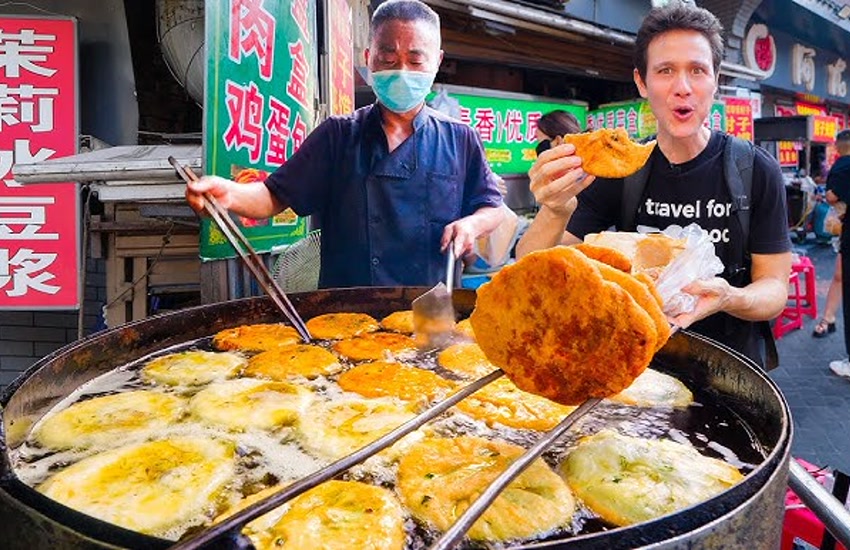
The breakfast crepe of the wheat belt. Mung-bean or millet batter cooked on a hot griddle, topped with egg, scallions, cilantro, chili sauce, hoisin, and a crispy fried wrapper (baocui). Folded into a hand-held square. ¥6-15 from street stalls. Best in Tianjin (the birthplace) and Beijing.
Lamb skewers (yang rou chuan’er, 羊肉串)
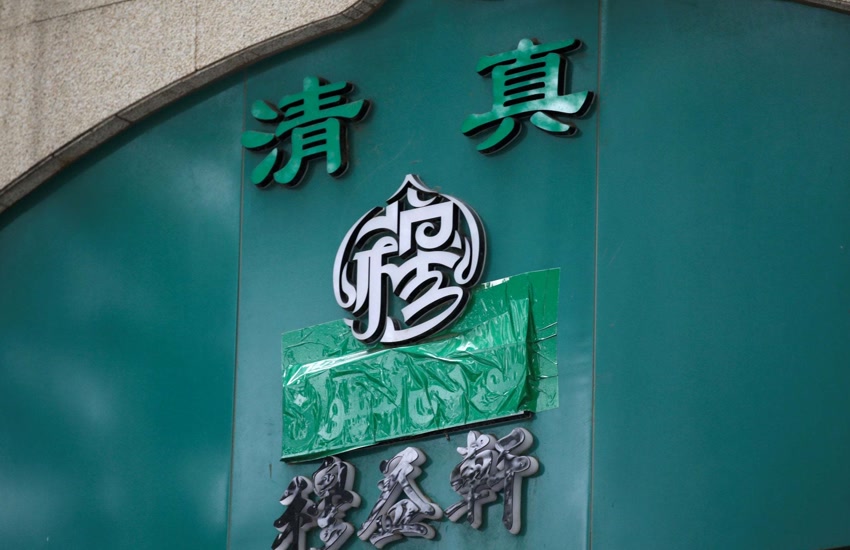
The Xinjiang-Uyghur signature snack adopted nationwide. Cumin-and-chili-rubbed lamb skewers grilled over charcoal. ¥3-8 per skewer at street stalls. Best at Uyghur-run shops; visible orange-and-red Arabic-script signage indicates authentic operation.
Roujiamo (肉夹馍)
The “Chinese hamburger” — slow-braised spiced pork or beef, chopped and stuffed into a hand-toasted flatbread (mo). Xi’an’s signature; ¥10-15. Chain restaurant Xi’an Famous Foods has popularized this internationally; in-China original versions are richer and more refined.
Bingtanghulu (冰糖葫芦)
Candied hawthorn berries (sometimes strawberries or kiwi) on a bamboo skewer, coated in hardened crystallized sugar. The Beijing winter-snack classic. ¥5-10 per skewer.
Doujiang + youtiao (豆浆 + 油条)
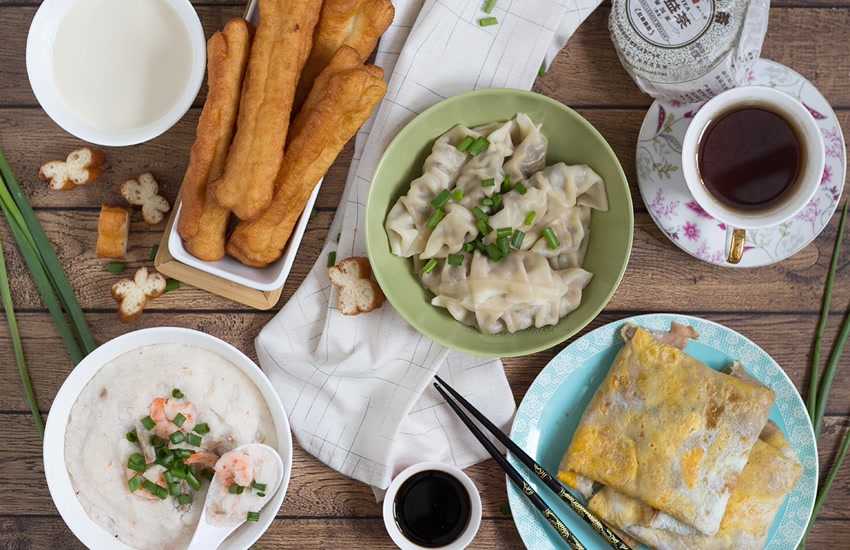
Hot soy milk + fried dough cruller — the universal northern breakfast. ¥6-12 for the combo. Found everywhere; chain restaurant Yonghe Da Wang standardizes it across cities.
Southern China snacks
Cheung fun (肠粉)
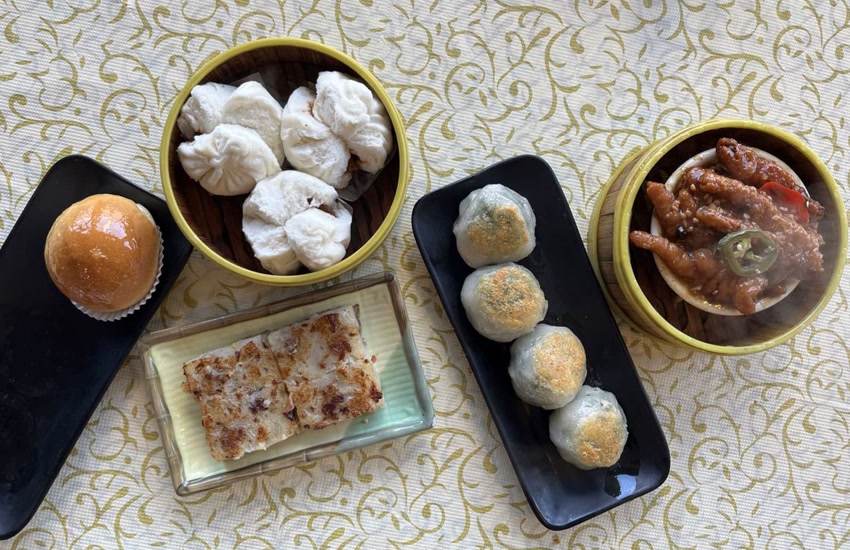
Silky rice-noodle rolls filled with shrimp, char siu, or beef, served with sweetened soy sauce. The Cantonese morning-and-snack staple. ¥10-25 a serving. Best at Hong Kong or Guangzhou dim-sum tea-houses.
Bubble tea (zhenzhu naicha, 珍珠奶茶)
Modern Chinese street drink (originally from Taiwan, now reinvented mainland-wide). Milk tea with chewy tapioca pearls. Chains: Heytea, Nayuki, Yi Dian Dian, Coco. ¥15-35 per cup. The mid-afternoon snack of urban China.
Shaomai (烧麦)
Open-topped pork-and-shrimp dumplings, often with crab roe on top. Dim-sum classic. ¥8-25 a basket. Best at Cantonese tea-houses.
Sticky rice cakes (年糕 / 糍粑)
Glutinous rice mochi-style cakes, sometimes with sweet filling (red bean, peanut paste) or savory (pickled vegetables). Found in southern street stalls, especially in Hunan and Sichuan. ¥6-12.
Mango pudding + mango sago
The Cantonese dessert classic. Coconut + tapioca + mango + cream — the chilled summer snack. ¥15-30 a serving. Chains: HoneymoonDessert, Honeymoon Express.
Western China snacks
Liangpi (凉皮)
Cold rice or wheat noodles in chili-sesame-vinegar dressing. Xi’an’s signature street snack. ¥10-15. Refreshing in summer.
Yang rou pao mo (羊肉泡馍)
Lamb soup with broken-apart flatbread chunks — diners tear the bread themselves before serving. Hearty winter snack from Xi’an. ¥25-40 for a full bowl.
Dan dan mian (担担面)
Chengdu’s signature street noodle — spicy peanut-sesame-pickled-vegetable sauce on thin noodles. ¥15-25. Best at the small noodle shops, not at hotel restaurants.
Mapo dofu (麻婆豆腐)
Numbing-spicy Sichuan tofu dish. Strictly speaking a meal not a snack, but ubiquitous as a small-portion side. ¥15-30.
Eastern China snacks
Shengjianbao (生煎包)
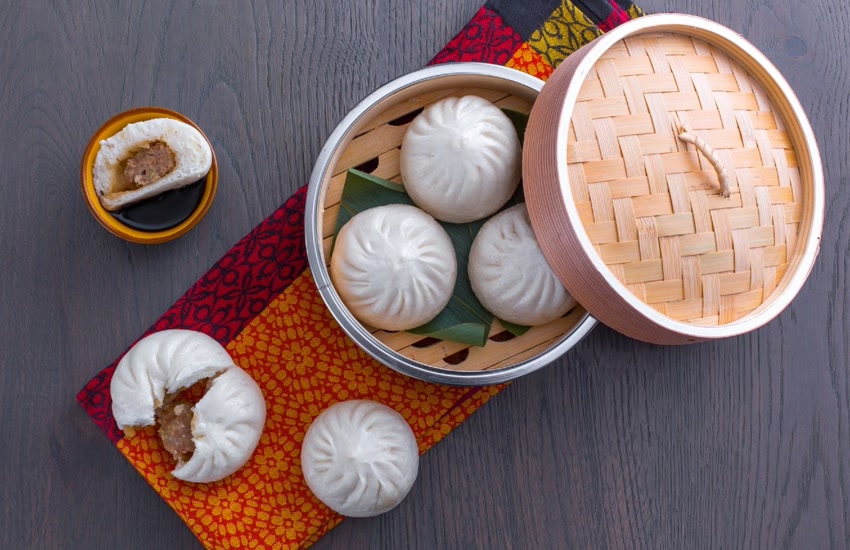
Shanghai’s signature pan-fried bun — crispy bottom, steamed top, hot soup-broth filling. ¥15-25 per portion of 4. Eat with black vinegar and ginger.
Xiaolongbao (小笼包)
The Shanghai-Wuxi soup dumpling. Thin wrappers, broth inside, bite carefully. ¥30-90 per basket depending on quality. Famous shops: Jia Jia Tang Bao, Din Tai Fung.
Ci fan tuan (粢饭团)
Shanghai breakfast rice-ball wrap: warm sticky rice wrapped around youtiao + pork floss + pickled vegetables. ¥6-12 from morning stalls. Hand-held, eat walking.
Where to find the best snacks
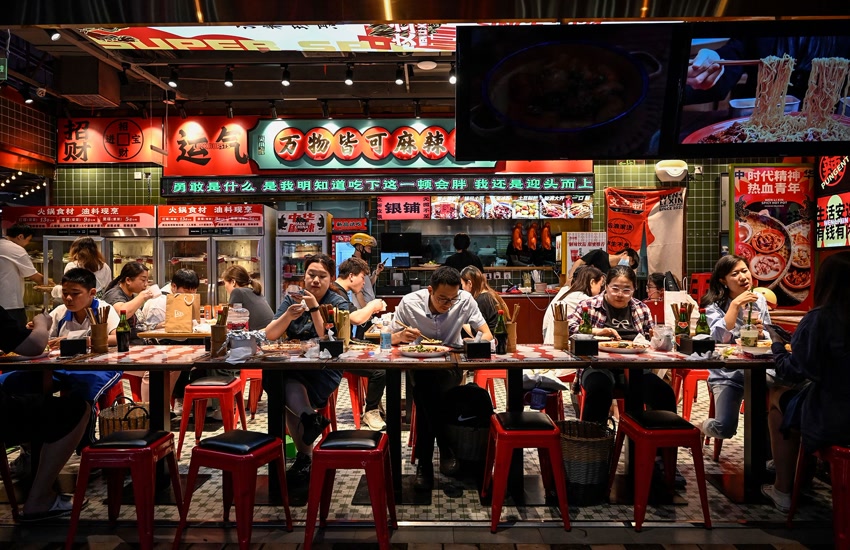
- Night markets: every Chinese city has them. Beijing’s Wangfujing (touristy) + Guijie (local). Shanghai’s Shouning Road (when open). Xi’an’s Muslim Quarter. Chengdu’s Jinli + Kuanzhai Xiangzi. ¥40-100 for a full snack-tour evening.
- Snack streets (xiaochi jie): dedicated lanes of mostly-snack stalls. Beijing’s Niujie, Xi’an’s Beiyuanmen (Muslim Quarter), Guangzhou’s Shangxiajiu, Wuhan’s Hubu Xiang.
- Train station food courts: improving rapidly; many now have regional-specialty stalls. Useful for trying regional snacks during transit.
- Wet markets in morning hours: street snacks set up near produce markets. Best 06:00-10:00 for breakfast options.
- Office building lunch zones: 11:30-13:30 — workers’ lunch streets in every CBD have snack options for a quick standing meal.
Foreign-visitor practical tips
- Payment: Alipay International + WeChat Pay are universal. Cash works at most stalls. Foreign credit cards rarely.
- Allergies: peanut and sesame are common in sauces. Pork is in many fillings. Use Pleco’s allergy phrases or pre-translated cards: “我对花生过敏” (peanut), “我对芝麻过敏” (sesame), “里面有猪肉吗?” (Is there pork?).
- Hygiene: high-turnover stalls are safer than low-traffic ones. Watch for visible cooking heat (steam or grill) and clean prep surfaces.
- Spice level: Sichuan, Hunan, Yunnan dishes are seriously spicy. Ask “不辣” (bù là — not spicy) or “微辣” (wēi là — slightly spicy) if you’re uncertain.
- Eat in season: hairy crab (autumn), spring vegetables (March-April), winter hotpot snacks (December-February). Seasonal-specific snacks are the best version.
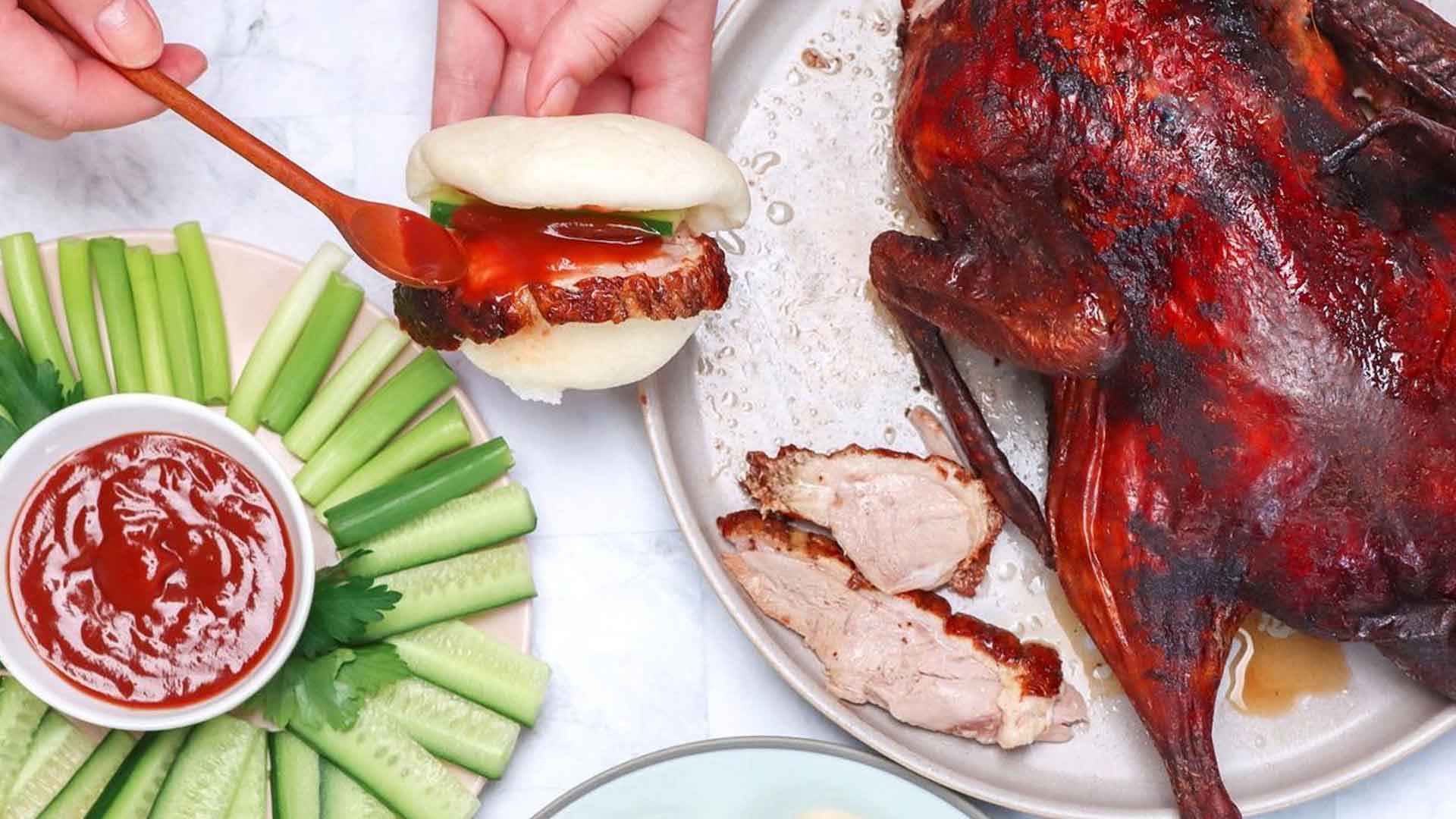
- Sit-down chains as fallback: Yonghe Da Wang (breakfast/snacks), Mr. Lee (Beijing duck wrap snacks), Wagas (Western-Chinese mix in big cities) — useful when you want a cleaner sit-down version of street snacks.
A 1-day snack itinerary template
For any major Chinese city:
- 07:00-09:00: breakfast snack — jianbing or doujiang+youtiao from a street stall near your hotel
- 10:30: morning tea snack — bubble tea or a small bakery item
- 12:00-13:00: lunch — 2-3 small dishes at a local restaurant, or noodle bowl from a snack stand
- 15:00: afternoon tea — fruit, mochi, or a sweet from a dessert chain
- 17:00-19:00: dinner — sit-down full meal at a regional restaurant
- 20:00-22:00: night-market snacks — skewers, dumplings, sweets, beer
Budget: ¥150-250 per person for a full day of snacks + meals.