
- Hui Muslim population
- ~10.6 million (2020 census); concentrated in Northwest + scattered across all major cities
- Halal certification
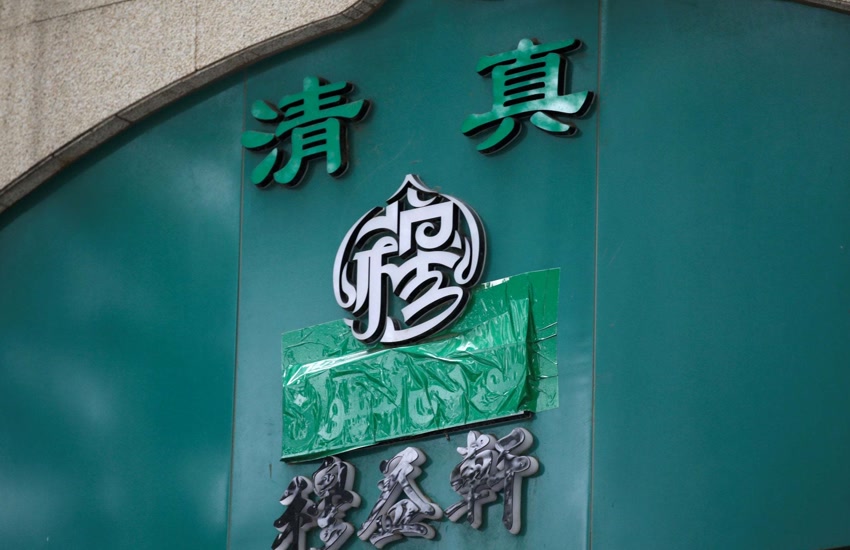
- Look for 清真 (qīngzhēn) sign — green crescent + 'halal' in Arabic/Chinese
- Best regions for halal food
- Ningxia, Gansu, Xinjiang, Qinghai; Beijing Niujie Mosque district, Xi'an Muslim Quarter
- Signature halal dishes
- Lamb skewers (羊肉串), hand-pulled noodles (lamian), nang bread, big-plate chicken
- Prayer logistics
- Mosques in most cities — Niujie Beijing (oldest, 996 CE), Great Mosque of Xi'an, Dongguan Mosque Xining
As of May 2026, last reviewed by an LTC editor.
China has 20+ million Muslim residents — primarily the Hui (Han Chinese Muslims spread across the country) and the Uyghur (Turkic-language speakers concentrated in Xinjiang). Halal (清真, qīngzhēn) restaurants are common in major cities and dominant in some regions. For foreign Muslim visitors, eating halal in China is more accessible than most expect — though regional patterns matter, and a few practical rules make the difference between a smooth trip and frustration. This guide covers where to find halal food, what to look for, and what to ask.
What “halal” means in Chinese context
The character set 清真 (qīngzhēn — literally “pure-true”) is the universal Chinese signifier for halal. It appears on restaurant signs, food packaging, and shop signage. The Mandarin term replaces the Arabic “halal” entirely in mainland China usage.
Halal certification in China is administered regionally — Ningxia, Xinjiang, Gansu, and Qinghai have the most formalized halal regulatory frameworks. Halal-certified chain restaurants and packaged-food brands display 清真 prominently. Foreign Muslim visitors should know that halal certification standards vary; the Ningxia + Xinjiang certifications are generally considered the strictest.
Regional patterns
Northwestern China (Xinjiang, Ningxia, Gansu, Qinghai)
Halal food dominates these regions. Hui-Muslim and Uyghur cuisine is the local food culture; entire cities have halal-only options. Specialties:
- Lamb skewers (yang rou chuan) — the universal northwestern snack
- Hand-pulled lamb noodles (la mian) — Lanzhou’s signature dish
- Big-plate chicken (Da Pan Ji) — Xinjiang Uyghur classic
- Nang bread (馕) — Uyghur naan-style flatbread
- Pilaf rice (zhuafan) — Uyghur saffron-and-lamb rice
- Lamb soup with bread (yang rou pao mo) — Xi’an specialty
- Roujiamo — Xi’an “Chinese hamburger” with lamb or beef in flatbread
Major cities outside the Muslim-majority regions
Every major Chinese city has Hui-Muslim restaurants concentrated in specific districts:
- Beijing: Niujie (“Cow Street”) in Xicheng district — the historic Hui-Muslim quarter with 1,000+ year Niujie Mosque. Multiple halal restaurants + halal snack shops. The lamb hotpot at Donglaishun and the lamb skewers at countless small shops are highlights.
- Xi’an: the Muslim Quarter (Beiyuanmen) is the most famous halal food street in mainland China. 100+ stalls and restaurants in a 600m walking area. Visit at dinner time.
- Shanghai: Hu’aili Mosque area has halal restaurants; the Yunnan-Muslim-cuisine restaurant scene around Xizang Middle Road is small but high quality.
- Guangzhou: Huaisheng Mosque + Xianxianlu mosque areas. Halal Cantonese-style fusion exists.
- Chengdu: Hui Muslim noodle shops scattered throughout the city.
- Kunming + Dali: Yunnan-Muslim cuisine has distinct features (rose-petal sweets, sesame oil + mutton dishes).
Southern + coastal China
Halal options thinner. Most major hotels and chain restaurants in Guangzhou, Shenzhen, Shanghai have halal-certified options or kitchen segregation by request. Smaller cities require advance research.
How to find halal food
- Look for the 清真 character on storefronts. Often green-colored signage. Combined with crescent moon or “Halal Food” in English.
- Mosques as landmarks: most cities cluster halal restaurants near mosques. Niujie Mosque (Beijing), Great Mosque of Xi’an (Beiyuanmen Muslim Quarter), Huaisheng Mosque (Guangzhou).
- Halal Trip + Dianping: Halal Trip is an English-language Muslim-traveler app with verified listings. Dianping (Chinese Yelp) filters by 清真 category.
- Hotel concierge: international hotels in major cities will help locate halal options.
- Chinese phrase to ask: “请问哪里有清真餐厅?” (Qǐng wèn nǎlǐ yǒu qīngzhēn cāntīng? — “Where is a halal restaurant?”)
What to verify at the restaurant
- Visible 清真 certification: most restaurants display the halal certificate on the wall.
- No pork on menu: a fully halal restaurant will have zero pork dishes.
- Separate kitchens: some Chinese restaurants offer “halal sections” but use shared cooking equipment. Strictly observant Muslims should verify.
- Alcohol policy: most halal restaurants don’t serve alcohol; some offer it on request. Verify if this matters to you.
- Mosque proximity: a restaurant within 200m of a working mosque is virtually always halal-compliant; staff likely Hui or Uyghur.
Halal during travel + on the road
- Trains: long-distance trains have halal-meal pre-order options on Trip.com or 12306. Choose “清真餐” when booking. Some trains also have halal carts.
- Flights: all major Chinese airlines (Air China, China Eastern, China Southern, Xiamen Air) offer Muslim Meal (MOML) when pre-ordered 24-48 hours before departure.
- Highway service stations: most highway rest stations on routes through northwestern China have halal options. Outside northwest, mixed.
- Hotel breakfast: 4-star and above hotels in major cities usually have halal options or can prepare them on request. Verify in advance for smaller hotels.
- Convenience stores: 7-Eleven, FamilyMart sell packaged halal-certified snacks (look for 清真 on packaging). Bread, eggs, fruit, packaged crackers are usually safe.
What to avoid
- Pork products in disguise: rou jia mo at non-halal shops, dumplings without clear filling listed. Always ask.
- Lard-cooked foods: some Chinese vegetable dishes are fried in lard. At non-halal restaurants, ask: “用什么油做的?” (Yòng shénme yóu zuò de? — “What oil is this cooked in?”)
- Soup bases: pork-bone broth is common in noodle dishes outside halal contexts.
- Cross-contamination: non-halal restaurants offering “halal” beef dishes may use shared woks.
Halal cuisine highlights worth seeking out
- Lanzhou beef noodles — the original hand-pulled noodle dish, halal everywhere it’s served. Chain Mali Lanzhou Beef Noodle is universally reliable.
- Xinjiang lamb skewers — visit a Uyghur-run shop with visible Arabic-script signage in any Chinese city.
- Yang rou pao mo (Xi’an lamb soup) — break bread into broth at the table.
- Nang bread + samsa — Uyghur tandoor-baked flatbreads + meat-filled pastries.
- Big-plate chicken (Da Pan Ji) — Xinjiang spicy chicken + potato stew over hand-pulled belt noodles.
- Hui-style hotpot — lamb-focused, less spicy than Sichuan version. Donglaishun (Beijing) is the classic.
Practical tips for Muslim foreign visitors
- Prayer logistics: major mosques in Beijing, Xi’an, Lanzhou, Yinchuan, and Urumqi accommodate visitors. Smaller mosques in commercial areas of every city. Hotels generally accommodate prayer needs.
- Ramadan in China: Hui + Uyghur communities observe Ramadan. Some restaurants in Muslim-majority areas adjust hours. Foreign Muslim visitors during Ramadan should plan iftar (sunset meal) in Hui-Muslim districts where iftar dinners are public events.
- Friday prayers: major mosques have Friday congregational prayers around 13:00. Visitors welcome with modest dress.
- Pork-free packaged foods: look for 清真 on convenience store snacks.
- Language: Pleco app has built-in halal vocabulary. Translate “I’m Muslim, no pork” cards in Mandarin to carry. Photo of halal certification helps in remote areas.