
- Local name
- Beijing kao ya 北京烤鸭 — Peking roast duck
- Origin
- Imperial Yuan Dynasty kitchen (~1330); current style codified at Quanjude (1864)
- Top restaurants
- Quanjude (oldest), Da Dong (modernist), Bianyifang (oldest Beijing duck — 1416), Siji Minfu
- Typical cost
- ¥200-¥400 per whole duck at famous houses
- Eating method
- Crispy skin first with sugar; then meat in pancake with scallion, cucumber, hoisin sauce
As of May 2026, last reviewed by an LTC editor.
Beijing duck (北京烤鸭, Běijīng kǎoyā) is the single most-iconic dish in Chinese cuisine — a roast duck preparation with 600+ years of imperial heritage, crispy skin lacquered to a golden hue, served with thin pancakes, scallions, cucumber, and sweet bean sauce. For foreign visitors, eating Beijing duck properly is one of Beijing’s most-essential cultural experiences. This guide covers the dish’s history, the difference between Beijing’s competing duck institutions, what to order, and the etiquette.
The dish in 30 seconds
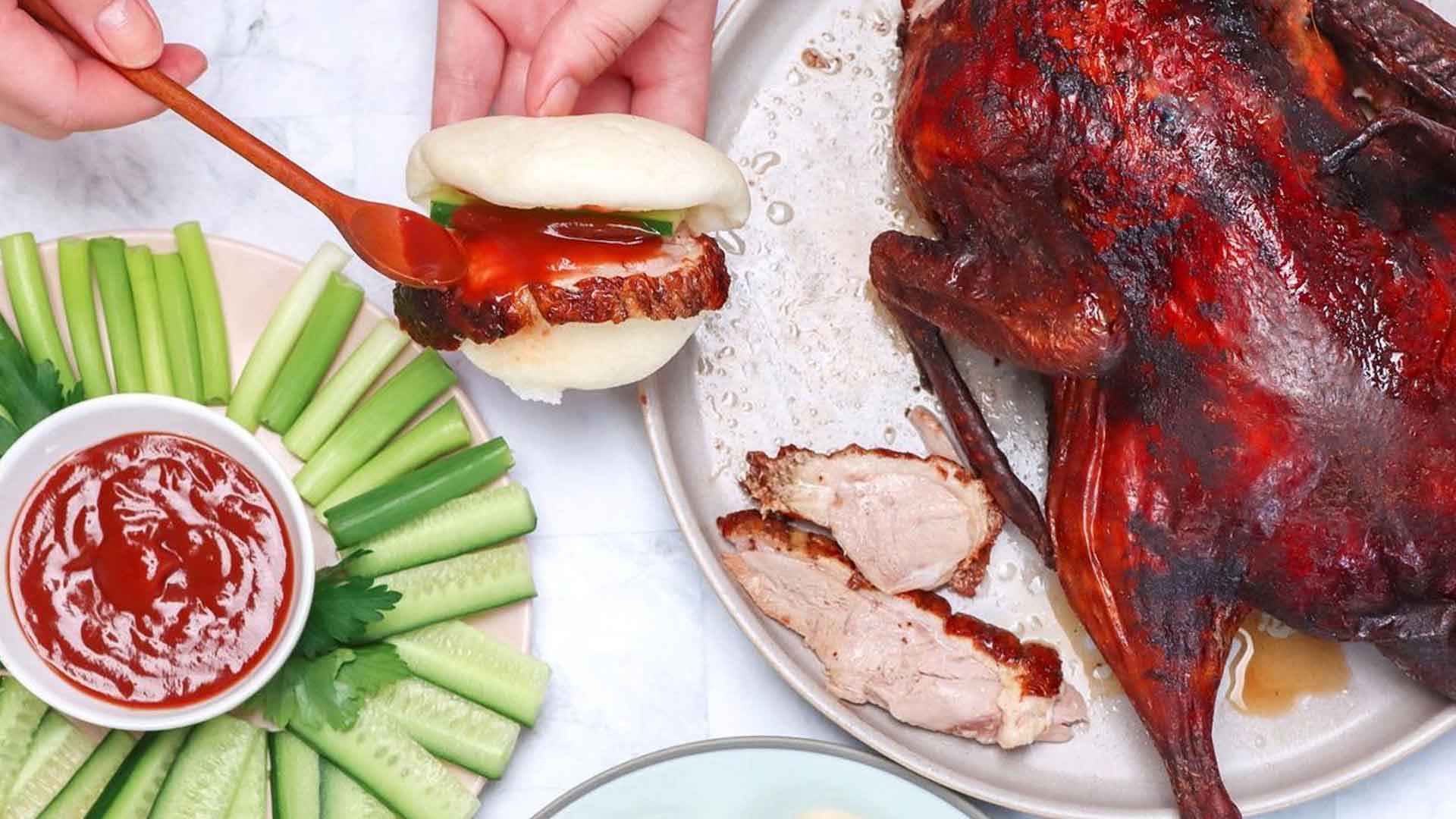
Beijing duck is a specific preparation: a duck (typically the Pekin breed, force-fed to develop a layer of fat under the skin) is hung to air-dry, then roasted in a wood-fired oven until the skin becomes glass-crispy. At the table, a chef slices the duck into 108 (or 120) ceremonial pieces, with the crispy skin presented separately. Diners wrap pieces of duck + scallion + cucumber in thin pancakes (similar to Mexican flour tortillas, but thinner and more delicate), brush sweet hoisin-style bean sauce inside, fold, and eat by hand.
The pieces are served in three categories: skin only (the prized portion), skin-with-meat, and meat only. The remaining duck carcass becomes soup served at the end.
The history
Roast duck originated in southern China and was a Yuan dynasty (1271-1368) imperial dish. It moved to Beijing during the Ming dynasty (1368-1644) when the capital relocated. By the Qing dynasty, two competing preparation methods emerged:
- Menlu kao (hung-oven method) — duck cooked in a closed brick oven heated from below; results in evenly-cooked, slightly smoky duck. Bianyifang uses this method.
- Guolu kao (open-oven method) — duck cooked in a wood-fired hanging oven over open flame; results in crispier skin with smoke flavor. Quanjude uses this method.
Both methods produce excellent duck; the difference is subtle and matters mostly to enthusiasts. First-time visitors get the same iconic experience at either.
The major Beijing duck restaurants
1. Quanjude (全聚德) — the famous institution
Founded 1864. The most famous Beijing duck restaurant brand. Multiple Beijing locations, plus branches across China and internationally. The Qianmen (front-gate) flagship is the most-touristed; the Hepingmen location is the original premium branch. Average per-person spending ¥250-450. The duck arrives carved tableside; servers explain the slicing tradition. Reservations strongly recommended.
2. Bianyifang (便宜坊) — the older institution
Founded ~1416 (yes, predates Quanjude by 400+ years). Specializes in the closed-oven method. Less foreign-tourist-targeted but excellent quality. Multiple Beijing locations. ¥200-350 per person.
3. Da Dong (大董) — the modern luxury version
The most-acclaimed modern Beijing duck restaurant. Innovates on classic preparation — leaner duck (less fat than traditional), elaborate Western-style presentation, modern dining-room design. ¥500-1,200 per person. The Tuanjiehu and Wangfujing branches are flagships. Reservations 2-4 weeks ahead.
4. Siji Minfu (四季民福) — the quality value
Mid-tier price point with consistently excellent duck. Multiple branches around Beijing’s historic sites. ¥150-300 per person. Recommended for visitors wanting authentic experience without the Da Dong price point.
5. Liqun Roast Duck — the courtyard experience
Family-run hutong location near the Forbidden City. Lower-tier facility but excellent duck. The most authentic atmosphere for visitors wanting the experience over the prestige. Cash + reservations only. ¥150-250 per person.
How a Beijing duck dinner works
- Order the duck: select whole duck (full ceremonial slicing) or half duck (limited). Whole duck ¥200-400 depending on restaurant; half duck ¥100-200.
- Slicing presentation: chef brings the whole duck on a cart, slices it tableside in 108 ceremonial cuts (or 120 at some venues). Skin pieces presented separately from skin-with-meat.
- The three pancake wraps:
- First wrap: crispy skin only + sugar (the prized first bite)
- Second wrap: skin with meat + scallions + cucumber + sauce
- Third wrap: meat only with vegetables
- Wrap technique: spread pancake flat, brush hoisin in center stripe, add 2-3 strips of duck + scallion + cucumber, fold (bottom-up, sides-in), eat by hand.
- Duck soup finale: the carcass is taken back to the kitchen and made into soup, served at the end of the meal.
- Side dishes: typical accompaniments — duck liver, duck blood soup, duck-bone soup, fried duck heart, garlic-stir-fried vegetables.
How much duck do you need?
- 2 people: 1 half duck + 2 side dishes
- 3-4 people: 1 whole duck + 2-3 side dishes
- 5-6 people: 1 whole duck + 4-5 side dishes
- 7-10 people: 1-1.5 whole ducks + 5-8 side dishes
One duck typically serves 3-4 people generously. Over-ordering duck is a common foreign mistake. Order one duck first, see how it goes, then order more.
Etiquette + cultural notes
- Eat with hands: pancakes are designed for hand-eating; using chopsticks for the wrap is wrong.
- The first wrap: skin + sugar — eat this first to appreciate the unique texture. Most visitors prefer the skin-with-meat wraps.
- Pancake care: keep pancakes warm; cold pancakes crack when folded.
- Sauce control: thin stripe of hoisin, not a heavy spread — the duck flavor should dominate.
- Toast etiquette: if you’re hosting Chinese guests, a 65-105° baijiu toast pairs traditionally with Beijing duck. Modern dinners often use beer or wine.
- Sharing: family-style sharing; one duck divided across all diners. Solo diners can order half-duck.
- Leftovers: rare to take home; Beijing duck is best eaten fresh.
Best season + reservations
- Year-round: Beijing duck is served year-round at all major venues.
- Peak season: October-November (post-Golden-Week, cool weather, peak foreigner travel) — book 1-3 weeks ahead.
- Off-peak: January-February and July-August — walk-ins more feasible but reservations still recommended.
- How to reserve: Chinese restaurants accept WeChat-based reservations through Dianping (Chinese Yelp) or directly via the restaurant. International hotels can help foreign visitors book.
Beyond Beijing — variations across China
Beijing duck is the original, but variations exist:
- Hong Kong roast duck — Cantonese preparation with five-spice marinade; smaller, denser, served in slices over rice.
- Nanjing salted duck — boiled rather than roasted; served cold; lighter flavor.
- Taiwan-style duck — uses different breed; sometimes braised rather than roasted.
- Sichuan tea-smoked duck — wood-smoked over tea leaves; different preparation entirely.
For first-time visitors, Beijing-style at a Beijing institution is the canonical experience.
Practical tips for foreigners
- Reservations essential: especially at Da Dong, Quanjude flagships, and Liqun. Book 1-4 weeks ahead.
- Allow 90-120 minutes: properly-eaten Beijing duck takes time. Don’t rush.
- Skip lunch if dinner is duck: it’s a substantial meal.
- Photography: chefs slice tableside — photogenic moment. Most venues allow photography.
- Foreign cards: Quanjude and Da Dong flagship venues accept international credit cards; smaller venues are Alipay/WeChat or cash only.
- Pleco translator: useful for side-dish menu navigation.
- Allergies: shellfish in side dishes possible; nuts in some sauces; gluten in pancakes.
- Children: most Beijing duck restaurants are family-friendly; high chairs available.