
- Staples
- Youtiao (油条 fried dough), congee (粥), soy milk, baozi (包子), jianbing (煎饼), shaobing (烧饼)
- Regional variation
- North: wheat-based (noodles, mantou). South: rice + congee. Cantonese: dim sum tea-house breakfast
- Where to eat
- Street stalls 06:00-09:30; chain breakfast shops (Yonghe Da Wang, Yoshinoya)
- Typical cost
- ¥8-¥25 per breakfast
- Signature combo
- Youtiao + warm soy milk + boiled egg — classic working-class breakfast
As of May 2026, last reviewed by an LTC editor.
Chinese breakfast is one of the most regionally-varied cuisines in the country. A morning meal in Beijing looks nothing like one in Shanghai; Guangzhou’s dim-sum brunch tradition has no equivalent in the wheat-belt north. For foreign visitors, breakfast is the most accessible doorway into local food culture — most options cost ¥10-30, are sold by street vendors and small shops, and are eaten standing up or walking. This guide covers the regional staples, where to find them, and what to expect.
The north-south breakfast divide
China’s culinary geography splits roughly along the Qinling-Huaihe line. North of it: wheat country — noodles, breads, mantou, baozi. South of it: rice country — congee, rice noodles, dim sum. Breakfast reflects this divide more sharply than any other meal.
- Northern breakfast (Beijing, Xi’an, Shandong): youtiao + soy milk, baozi + congee, jianbing, mantou + side dishes.
- Southern breakfast (Guangzhou, Hong Kong, Shanghai): rice congee, dim sum at tea-houses, rice noodles, sheng jian bao, xiaolongbao.
Modern China has homogenised somewhat — you can find southern dim sum in Beijing and northern baozi in Guangzhou — but the regional preferences remain visible in most local-leaning breakfast shops.
The essential staples
Youtiao + soy milk (油条 + 豆浆)
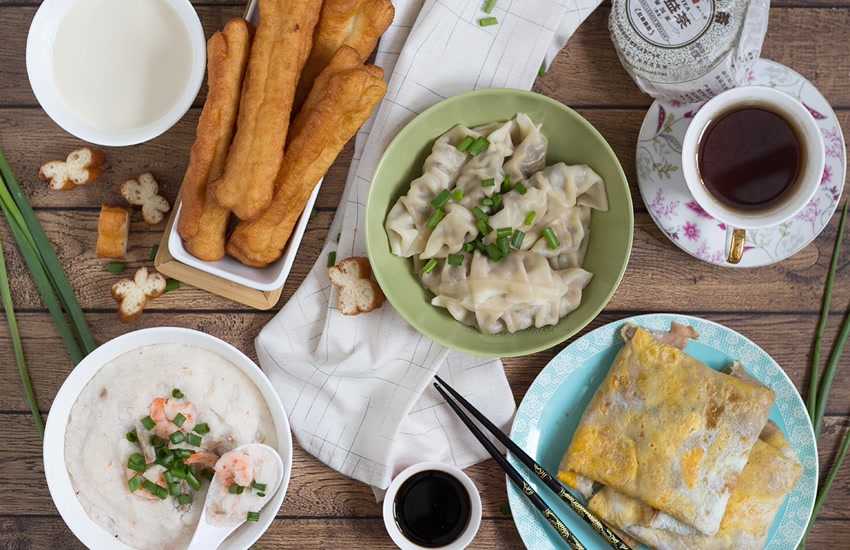
The canonical northern breakfast pair. Youtiao is a long, fried dough cruller — crispy outside, hollow inside, served warm. Dou jiang (soy milk) comes hot, served sweet or savoury depending on the shop. Together they cost ¥6-12 at street stalls. Found nationally but most authentic in northern cities. Chain restaurant Yonghe Da Wang (永和大王) standardises this combo across major cities.
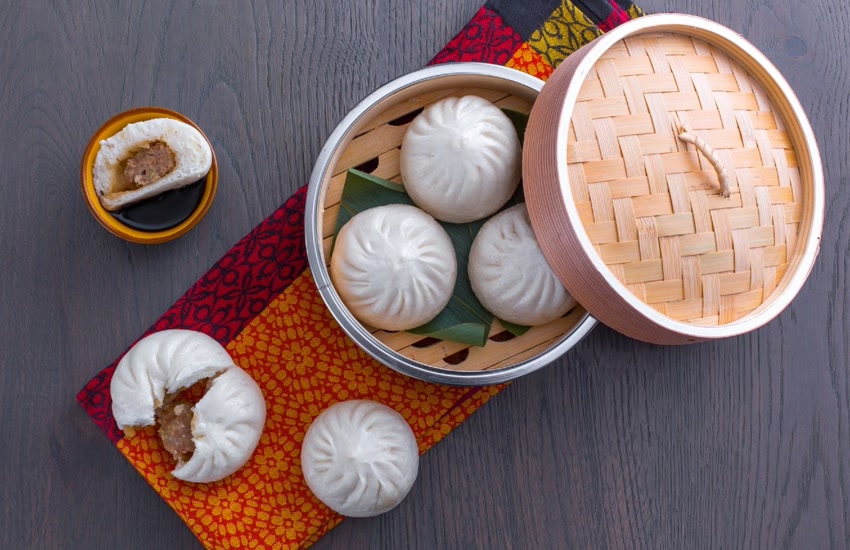
Baozi (包子) — steamed filled buns
Baozi are steamed yeasted buns with savoury or sweet fillings. Common varieties: pork-and-cabbage (most common), red-bean (sweet), char siu (Cantonese-style BBQ pork), and beef-and-onion. Sold by the unit (¥2-4 each) at street stalls in stackable bamboo steamers. Xiaolongbao (小笼包) are the Shanghai soup-dumpling variant — thinner skin, hot broth inside; eat carefully or risk burning yourself.
Congee (粥)
Slow-cooked savoury rice porridge — the southern breakfast workhorse. Eaten with toppings: century egg, pork, fish, peanuts, pickled vegetables. Cantonese congee is silky-smooth; northern congee is thicker. Pair with youtiao broken into the bowl. Costs ¥8-20 depending on toppings.
Jianbing (煎饼)
The street-food breakfast of choice in northern cities. A thin crepe of grain batter (millet, mung bean, or wheat flour) cooked on a hot griddle, topped with egg, scallions, cilantro, chili sauce, a crispy fried wrapper, and folded into a hand-held pocket. Made-to-order in 90 seconds, eaten walking. Tianjin’s original style is the most-respected; Beijing variants are most common; modern chains (Jianbing Master, BB Crepes) offer English menus.
Sheng jian bao (生煎包)
Shanghai’s signature pan-fried bun — bottom crispy, top steamed, pork-and-broth filling. Best at long-running shops like Yang’s Fried Dumplings (Xiao Yang Shengjian) which has multiple Shanghai locations. ¥15-25 for a portion of four. Eat with black vinegar and ginger.
Dim sum (点心) — Cantonese morning brunch
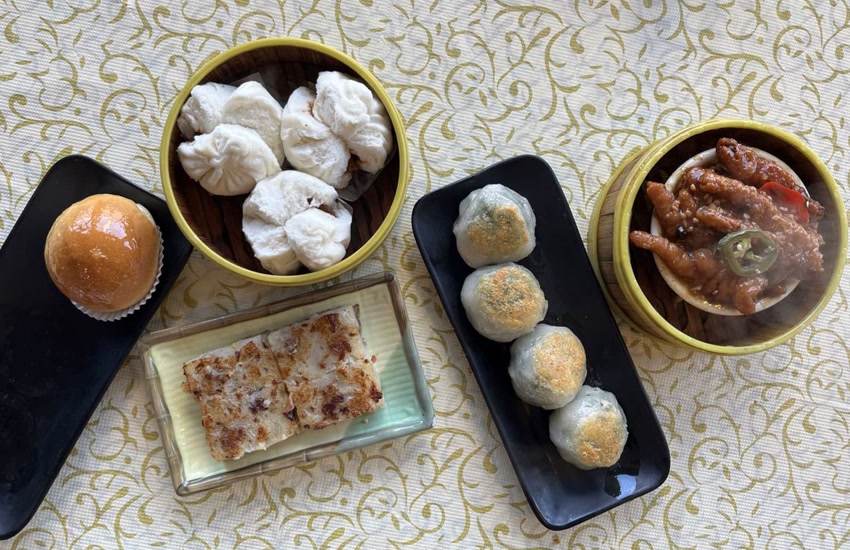
South China’s breakfast IS dim sum — small steamed and fried dishes served with tea, in long sit-down tea-house sessions. Foreign visitors usually treat it as an experience rather than a quick meal. Best cities: Guangzhou, Hong Kong, Macau, Shenzhen.
Shaobing (烧饼)
Sesame flatbreads — sometimes filled, sometimes plain. Common at northern street stalls. Pair with soy milk or congee. ¥3-5 each.
Rice noodles (米线/米粉)
The southern alternative to wheat noodles for breakfast. Yunnan’s crossing-bridge noodles, Guilin’s rice noodles, and Hunan’s flat rice noodles are regional specialties served from morning. ¥15-30 per bowl.
Where to eat — the venue tiers
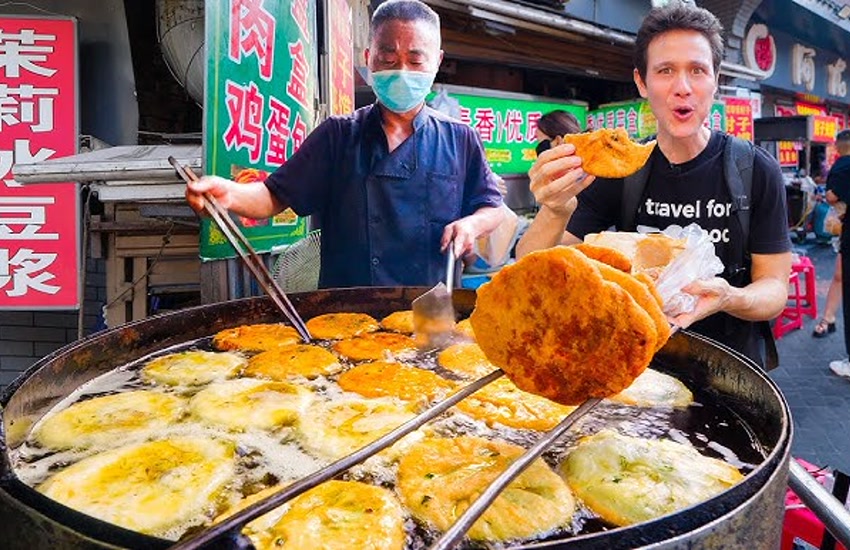
- Street stalls: cheapest (¥5-20), freshest, often best. Open 06:00-09:30 typically. Look for queues — a busy stall is a safer stall.
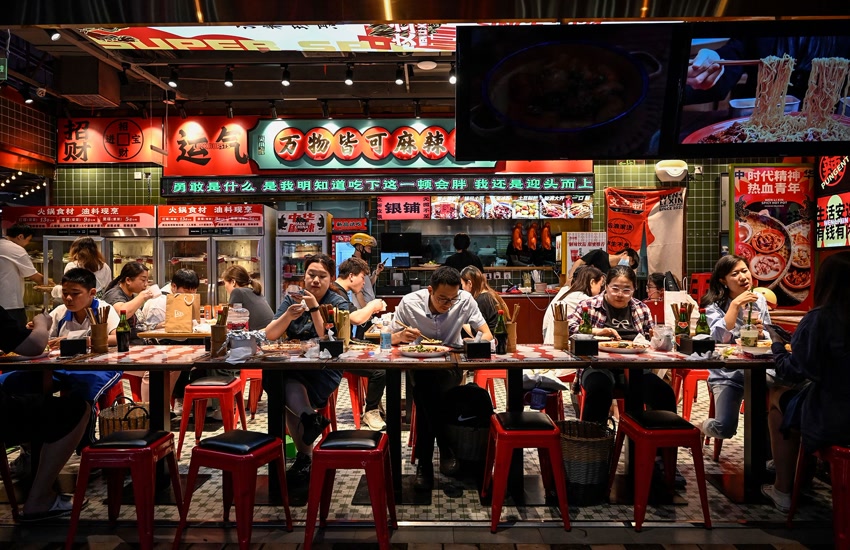
- Breakfast shops (早餐店): small sit-down places focused on breakfast. Open 06:00-10:30. Offer 5-10 standard items; ¥15-40 for a full breakfast.
- Chain breakfast restaurants: Yonghe Da Wang, Real Kungfu, Yoshinoya (Chinese-style breakfast menu). Standardised, reliable, slightly pricier (¥20-50). Good fallback for foreigners.
- Hotel breakfasts: international hotels offer Western + Chinese buffet. Useful for variety but expensive (¥80-200/person) and don’t show real local breakfast culture.
- Cantonese tea-houses: dim-sum brunch (10:00-14:00). Different meal pattern from quick breakfast.
Drink pairings — what locals drink with breakfast
- Dou jiang (soy milk) — hot, served sweet or savoury. The youtiao pairing.
- Salty soy milk (咸豆浆) — Shanghai-style breakfast soup with youtiao crumbles, dried shrimp, scallion, soy sauce, sesame oil.
- Tea — jasmine, oolong, pu-erh; standard at dim-sum venues.
- Hot soy milk (sweet) — the chain-restaurant default.
- Bone broth (骨头汤) — served with noodle breakfasts, especially northern.
- Hot water — universal Chinese breakfast drink. Don’t be surprised when a restaurant pours plain hot water without asking.
Regional specialties worth seeking out
- Beijing: ji dan guan bing (egg pancake), zha jiang mian (bean-paste noodles), nai you za jia (cream curd).
- Shanghai: sheng jian bao, xiaolongbao, ci fan tuan (rice-ball wrapper with youtiao + pork floss).
- Guangzhou: dim sum, cheung fun (rice noodle rolls), congee with century egg.
- Wuhan: re gan mian (hot dry noodles — sesame paste-coated, signature Wuhan breakfast).
- Xi’an: rou jia mo (Chinese hamburger; spiced pork in flatbread), yang rou pao mo (lamb-soup with bread crumbles).
- Chengdu: dan dan mian, lai tang yuan (sweet rice dumplings).
- Tianjin: original-style jianbing (with mung-bean batter), goubuli baozi.
Practical tips for foreigners
- Cash + payment apps: most breakfast stalls take cash and WeChat/Alipay. Small shops sometimes don’t take foreign cards directly; install Alipay International for foreigners.
- Hours: most breakfast stalls open 06:00 and close by 10:00. Late risers should aim for chain restaurants or hotel buffets.
- Ordering: point at displayed items. Photos on signs are common. “这个” (zhège — “this one”) works universally.
- Allergies + dietary restrictions: pork is in many fillings; ask “里面有猪肉吗?” (Lǐmiàn yǒu zhūròu ma? — “Is there pork inside?”) or use Pleco’s allergy phrases.
- Sanitation: high-volume stalls are safer (fast turnover). Avoid stalls without visible activity. Common-sense food hygiene applies.
- Stomach build-up: introduce street food gradually; not every Chinese breakfast item agrees with a Western digestive system on day one. Carry loperamide as a precaution.