
- Origin
- Guangzhou (Canton) tea-house tradition, 10th century
- Best cities
- Guangzhou, Hong Kong, Macau, Shenzhen
- Typical meal cost
- ¥80-¥200 per person (mainland), HK$150-HK$400 (Hong Kong)
- Service window
- Morning to early afternoon ('yum cha' literally 'drink tea')
- Must-try dishes
- Har gow (shrimp dumpling), siu mai, char siu bao, cheung fun, egg tart
As of May 2026, last reviewed by an LTC editor.
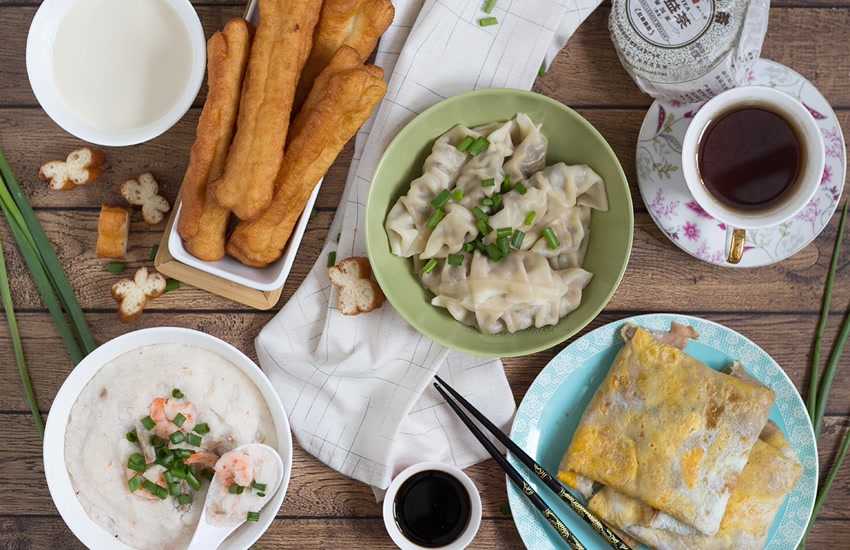
Dim sum (点心, literally “touch the heart”) is the most famous Cantonese culinary export — and the meal most foreigners specifically come to Guangzhou or Hong Kong for. Yum cha — “drink tea” — is the slow-paced morning-to-afternoon meal where bite-sized dishes arrive in steamer baskets, shared family-style across a large table. This guide covers what to order, how the service works, and where to eat dim sum properly for foreign visitors.
Origin and tradition
Dim sum evolved from Silk Road–era tea houses where tired travellers stopped for tea and snacks. The Cantonese tea-house tradition formalised this into a sit-down social meal — yum cha became the Cantonese way to spend a long morning with family or friends. Modern dim sum maintains the same shape: dozens of small dishes, communal sharing, multiple rounds of tea, and a meal that can stretch from 10am to 2pm.
The format is uniquely Cantonese. While modern restaurants serve dim sum outside Guangdong and Hong Kong, the social ritual — the unrushed pace, the family seating arrangement, the tea-pouring etiquette — is best preserved in its home cities.
How dim sum service works
Two service styles dominate, and the foreigner experience differs between them.
The traditional rolling-cart style
At older tea-houses (especially in Hong Kong’s Sham Shui Po and Guangzhou’s Liwan district), servers wheel carts loaded with steaming bamboo baskets through the dining room. You see what’s available, point at what looks good, and they bring it to your table. Pros: visual, tactile, easy for non-Cantonese speakers. Cons: limited to what’s on the cart at that moment; some popular dishes only come around once.
Cart venues to know:
- Lin Heung Tea House (Hong Kong) — 100+ year history, classic cart service
- Tao Heung branches (Hong Kong + Guangzhou) — large chain that maintains cart service in many locations
- Tim Ho Wan original branch (Sham Shui Po, Hong Kong) — the world’s cheapest Michelin-starred dim sum
The modern checklist style
Newer venues use a paper-card checklist: you mark which items you want, the kitchen prepares them, and they arrive in waves. Better for less-common items (kitchen makes them to order) and more controllable for foreign visitors who can read the bilingual checklist.
The must-try dishes
A first dim-sum experience should include the canon. These are the “test dishes” — get these wrong and the kitchen is judged. Get them right and the rest follows.
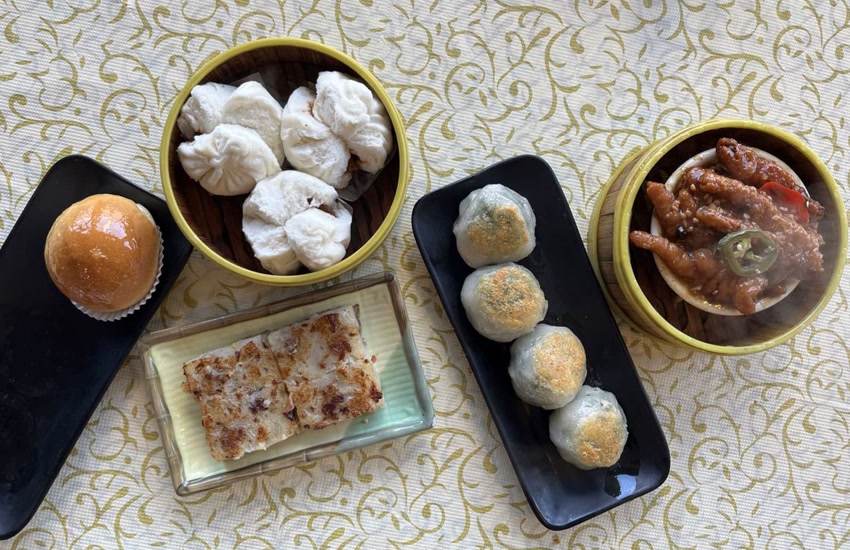
- Har gow (虾饺) — translucent shrimp dumplings with pleated wrappers. The single most-iconic dim sum. The wrapper should be thin enough to see the shrimp inside; the shrimp should bounce when bitten.
- Siu mai (烧卖) — open-topped pork-and-shrimp dumplings with yellow wrappers, often topped with a small piece of crab roe.
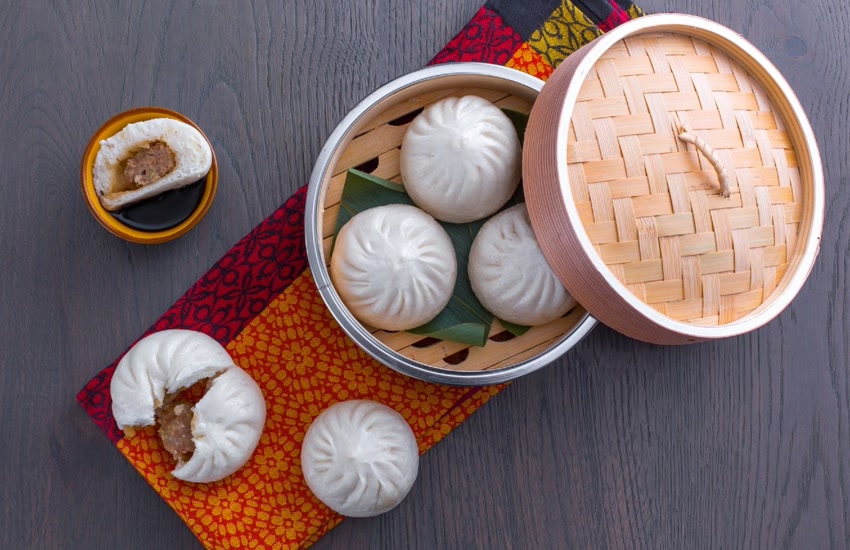
- Char siu bao (叉烧包) — fluffy steamed buns filled with sweet BBQ pork. The Cantonese counterpart to northern baozi.
- Cheung fun (肠粉) — silky rice-noodle rolls filled with shrimp, char siu, or beef, served with sweetened soy sauce.
- Lo mai gai (糯米鸡) — sticky rice wrapped in lotus leaves with chicken, mushroom, and Chinese sausage. Substantial, eat slow.
- Egg tart (蛋挞) — golden custard tart with a flaky shortcrust. The Macau-Portuguese style differs (caramelised top); the Hong Kong style is the more common dim-sum closer.
Beyond the basics
Once you’ve worked through the canon, the deeper dim-sum menu rewards exploration:
- Fung zao (凤爪) — chicken feet braised in black-bean sauce. A test of how committed you are to authentic Cantonese cuisine. Surprisingly delicious if you push through the texture novelty.
- Pai gwat (排骨) — steamed pork spareribs with black bean sauce. Pair with white rice if available.
- Xiao long bao (小笼包) — soup dumplings, Shanghai-origin but now ubiquitous on dim-sum menus. Bite carefully; the broth inside is hot.
- Wu gok (芋角) — taro dumplings with crispy fried lattice exterior, savoury filling. One of the more visually stunning dim sum.
- Spring rolls (春卷) — fried, crispy, simple. Available at every venue.
- Mango pudding (芒果布甸) — chilled sweet pudding; the Cantonese standard dessert.
- Sesame balls (煎堆) — deep-fried glutinous-rice balls with sesame seeds outside and red-bean paste inside.
- Egg custard buns (奶皇包) — steamed buns with sweet salted-egg-yolk custard.
Tea etiquette
Tea is integral to dim sum, not an afterthought. When you sit down, the server asks what tea you want. Standard options:
- Jasmine (香片) — light, fragrant, the most common foreigner choice
- Oolong (乌龙) — slightly stronger, pairs well with rich dim sum
- Pu-erh (普洱) — dark, earthy, the traditional Cantonese accompaniment to fatty dim sum
- Chrysanthemum (菊花) — sweet floral, often paired with pu-erh in colder months
The tea-tap thank-you: when someone refills your cup, tap two fingers (index + middle) on the table. This is wordless thanks — the Cantonese custom dating to a Qing emperor story. Foreigners doing this correctly always get an appreciative nod.
Refill etiquette: leave the teapot lid slightly ajar (lid resting on the rim) to signal “we need more tea”. The server will refill.
Best cities for dim sum
- Guangzhou — the birthplace; the most-traditional venues. Try Tao Heung, Lin Heung Tea House (Liwan), Guangzhou Restaurant (since 1939), Bingsheng (modern Cantonese). ¥80-200 per person.
- Hong Kong — the innovation hub; Michelin-starred options. Tim Ho Wan (Sham Shui Po original branch — cheap Michelin), Lung King Heen (3-star modern), Maxim’s Palace (City Hall, traditional cart service). HK$200-1,000 per person.
- Macau — Portuguese-Cantonese fusion. The egg tart specifically is Macau’s signature. Mid-tier dim sum venues in Taipa Village and the Cotai Strip casinos.
- Shenzhen — newer, more international. Good for visitors crossing from Hong Kong without the HK crowds.
- Shanghai + Beijing — dim sum exists but isn’t local; quality varies. Tim Ho Wan has Beijing and Shanghai branches that maintain the original Hong Kong standard.
Practical tips for foreigners
- Timing: dim sum service runs 10:00-14:00 at most venues. Some traditional houses open 06:30 for the breakfast crowd; dinner-dim-sum is rare. Aim for 10:30-12:00 for the best selection.
- Pacing: order 4-5 dishes initially, see what arrives, then order more. Over-ordering at the start is the most common foreigner mistake.
- Sharing: Cantonese custom is to share. Order variety, not duplicates of one dish.
- Bill: cart-style venues count empty baskets at the end; checklist venues tally the form. ¥80-200/person mid-tier in Guangzhou; HK$200-600 in Hong Kong.
- Hours of service: arrive early for the best variety. By 13:30 popular dishes (har gow, char siu bao) are usually sold out.
- Allergies: shellfish is common (har gow, siu mai, many cheung fun fillings). Peanut and sesame appear in sauces and sweet dishes. Flag both clearly: “我对XX过敏” (Wǒ duì XX guòmǐn).
- Foreign card payment: HK and mainland card acceptance differs. Bring Alipay or WeChat Pay (foreign-card flow) as the universal fallback.
What separates a good dim sum from a tourist trap
- Crowd of locals: if the venue is 90% foreign tourists, the kitchen is calibrated for tourists. Look for places where elderly Cantonese-speaking groups dominate the room.
- Multi-generational diners: families with grandparents are the strongest signal of an authentic venue.
- Tea-pouring etiquette visible: if other tables are doing the two-finger tap when refilled, you’re in the right kind of place.
- Cart freshness: at cart venues, baskets should be steaming. Cooled-down food on the cart is a sign of a slow afternoon.
- Bill per person: under HK$250 (HK) or ¥100 (Guangzhou) is local-tier pricing. Above this you’re paying for atmosphere or location.