
- Itinerary length
- 12 days from Yinchuan with detours into Inner Mongolia and Gansu
- Highlights
- Western Xia Tombs, Shapotou Desert + Yellow River, Helan Mountain rock art, Sand Lake
- Best season
- May-October — desert temperate; July-August peak heat
- Hui Muslim culture
- Ningxia is the Hui Autonomous Region; strong halal cuisine + mosque heritage
- Connection
- High-speed rail from Beijing/Xi'an; flights to Yinchuan Hedong
As of May 2026, last reviewed by an LTC editor.
Ningxia (宁夏) is one of mainland China’s least-visited provinces by foreign travellers — and one of the most rewarding for those willing to detour from the standard Beijing-Shanghai-Xi’an route. A Hui-Muslim autonomous region wedged between Inner Mongolia and Gansu, Ningxia sits squarely on the historical overland Silk Road, with desert, Yellow River canyon, Western Xia dynasty ruins, and one of the world’s largest collections of prehistoric rock art. This 12-day itinerary covers the foreigner-friendly route through Yinchuan, Shapotou, and the southern Liupanshan region.
Why Ningxia matters on a Silk Road trip
The historical Silk Road wasn’t a single road — it was a network of trade routes, with a northern leg running through Ningxia along the Yellow River. Caravans heading west to Central Asia stopped in Yinchuan; Buddhist monks brought scriptures along the same paths. Today the province retains visible Silk Road heritage: rock-art sites used by ancient steppe peoples, mosques showing the Hui Muslim community’s centuries-deep roots, and the Western Xia dynasty tombs — pyramidal earthen mounds that once rivalled their Egyptian counterparts.
Foreign visitors who include Ningxia in a longer China trip get a less-touristed counterpoint to Xi’an’s Terracotta Army and the heavily-promoted Dunhuang. Ningxia gets perhaps 1% of Xi’an’s foreign visitor flow.
The 12-day route
Days 1-3 — Yinchuan, the capital
Yinchuan (银川) is the provincial capital and gateway. Arrive by air (YIN) from Beijing or Xi’an (~2 hr flight), or by overnight high-speed rail. Key sites in Yinchuan:
- Western Xia Imperial Tombs — pyramidal mausoleums on the Helan Mountain foothills, 35km west of the city. Built by the Tangut Western Xia dynasty (1038-1227). Best half-day trip.
- Ningxia Museum — central, comprehensive Western Xia + Silk Road exhibits with English signage.
- Nanguan Mosque — Hui Muslim mosque with central-Asian architectural elements. Demonstrates Ningxia’s Islamic heritage. Modest dress required.
- Yinchuan Old Town — small but walkable; Hui-Muslim cuisine concentration along Cuiying Mountain Road.
Day 4 — Helan Mountain rock art
The Helan Mountain (贺兰山) site preserves more than 6,000 prehistoric petroglyphs — animals, hunting scenes, sun symbols — carved by nomadic peoples from 3,000-10,000 years ago. The site has signage in Chinese and partial English; guides available in Yinchuan for the half-day trip.
Days 5-7 — Shapotou + Yellow River + Tengger Desert
Drive or train south to Shapotou (沙坡头), where the Yellow River meets the Tengger Desert. This is the visual highlight of any Ningxia trip — a sand-mountain rising abruptly from the green riverbank, with the brown Yellow River curling below. Activities:
- Sand-skiing or sand-boarding down the dune (rentals at site)
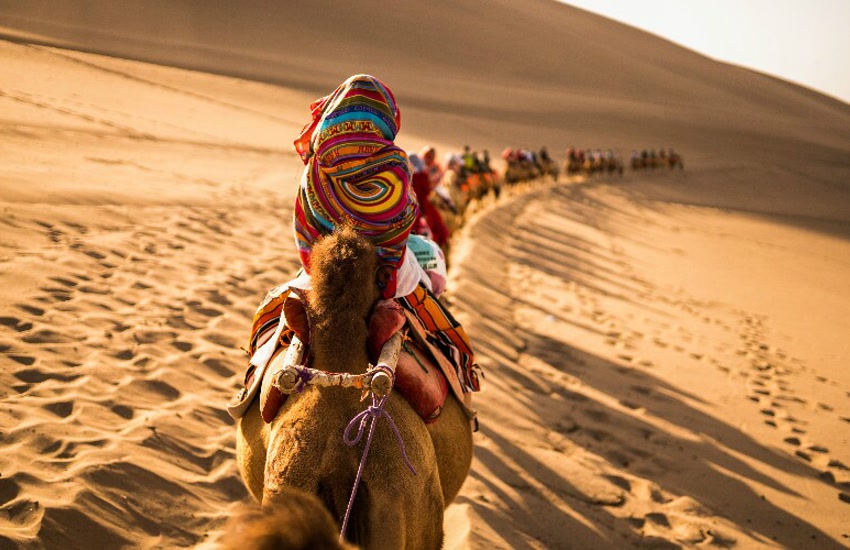
- Camel ride along the riverbank — practiced caravan-route reenactment
- Sheepskin-raft (yangpi mucha) crossings of the Yellow River — traditional river transport, now tourist-focused
- Tengger Desert hike or guided overnight in a desert camp
Recommended overnight: a Shapotou riverside hotel for the sunset, or a desert eco-lodge inside the dune zone.
Days 8-9 — Zhongwei + the Yellow River canyon
Zhongwei (中卫) is a small city near Shapotou with its own historic centre — Drum Tower, Gao Temple (a unique Buddhist-Taoist-Confucian three-religion temple), and access to the Yellow River canyon downstream. Worth a slower day-and-a-half pace.
Days 10-11 — Liupan Mountain + Guyuan
Southern Ningxia is hillier and more verdant than the desert north. Liupan Mountain (六盘山) was crossed by the Red Army on the Long March; the area has scenic parks, hiking, and the Xumi Shan Grottoes — a Buddhist cave-temple site with carvings comparable to (and predating) the more-famous Mogao Caves in Dunhuang. Guyuan (固原) is the southern access town.
Day 12 — Return
Return to Yinchuan by overnight or high-speed train, then onward flight or rail to Beijing/Xi’an/elsewhere.
Best season for Ningxia
May-October covers the comfortable temperatures and operational range for desert activities. July-August have peak heat (35°C+ in the desert) and occasional sandstorms. Sept-Oct are the most balanced — cool nights, comfortable days, clear skies for desert photography. Winter is feasible but bitterly cold (-15°C) and some desert activities pause.
Hui Muslim culture — what to expect
Ningxia is the Hui Autonomous Region (回族自治区). About 1/3 of the population is Hui — Chinese Muslims with Persian-Arab ancestry dating back to Silk Road-era caravans. This shapes the cuisine, architecture, and daily life:
- Cuisine: halal (清真) restaurants are everywhere. Specialties include hand-pulled lamb noodles, big-plate chicken (Da Pan Ji), nang bread, lamb skewers, and pumpkin pancakes.
- Mosques: hundreds across the region; the largest in Yinchuan, Guyuan, and Tongxin. Visitors are generally welcome with modest dress and quiet behaviour.
- Markets: Hui-style night markets sell dried fruits, nuts, dates, and Silk Road–era trade goods.
- No-pork zones: Hui-majority districts have no pork on menus or in shops. Pork-loving travellers should head to Han-majority areas for variety.
Practical logistics for foreign visitors
- Visa: standard L tourist visa; no special restrictions on Ningxia (unlike Tibet or parts of Xinjiang).
- Getting there: flights to Yinchuan Hedong (YIN) from Beijing (2 hr) or Xi’an (1.5 hr). High-speed rail Yinchuan-Xi’an exists; Yinchuan-Beijing requires connecting via Taiyuan or domestic flight.
- Getting around: hired car + driver from Yinchuan (¥600-900/day) is the most reliable. Public buses cover all destinations but slowly and with language friction.
- Accommodation: international chain hotels in Yinchuan; mid-tier domestic chains (Hanting, Jinjiang Inn) outside. Desert eco-lodges in Shapotou range ¥600-2,500/night.
- Payments: WeChat Pay and Alipay with foreign cards work as elsewhere. Cash useful in smaller towns.
- Language: less English signage than coastal cities. Pleco + Google Translate offline are essential.
How Ningxia compares to other Silk Road segments
- Vs Dunhuang (Gansu) — more visitor infrastructure but less crowded. Mogao Caves are more famous; Helan rock art is less crowded.
- Vs Xinjiang — more accessible (no special permits required for foreigners). Hui culture is gentler than the Uyghur context further west.
- Vs Inner Mongolia — more cultural sites; Inner Mongolia has more pure-grassland experience.
For a longer Silk Road project, Ningxia pairs naturally with Gansu (Dunhuang) and Xi’an. A 3-week trip covering Xi’an → Ningxia → Gansu → Xinjiang lets you traverse the historical overland route at a meaningful pace.