
- Itinerary length
- 7 days — Harbin → Yabuli → Yichun → Mudanjiang
- Best season
- December-February (ice festival), June-August (forests, lakes)
- Iconic event
- Harbin Ice and Snow Festival (Dec 24 - late Feb), Yabuli Ski Resort, China Snow Town
- Russian heritage
- Harbin's Saint Sophia Cathedral, Central Avenue cobblestone, Russian restaurants
- Wildlife
- Siberian tiger park (Yabuli), Zhalong Crane Nature Reserve (Qiqihar)
As of May 2026, last reviewed by an LTC editor.
Heilongjiang (黑龙江) — China’s northernmost province, bordering Russia along the Heilong (Amur) River — is one of mainland China’s most-overlooked travel destinations for foreign visitors. The province has the country’s largest forest reserves, the most-extreme winters, Siberian-tiger conservation centers, the international ice-and-snow festival in Harbin, summer alpine landscapes, and a unique Russian-Chinese border culture. This guide covers a 7-day itinerary, the seasonal-specific destinations, and the practical logistics for visiting Heilongjiang.
Why Heilongjiang for foreign visitors
Three things distinguish Heilongjiang from other Chinese destinations:
- Extreme seasonal contrast — winter temperatures dip to -40°C, summer reaches 30°C. Each season delivers a completely different province.
- Russian-Chinese borderland culture — 100+ years of trade history visible in Harbin’s St. Sophia Cathedral, Russian bakeries, and dual-language signage along the Russian border.
- Siberian forest ecology — the only sub-Arctic ecosystem in mainland China. Wild Siberian tigers, brown bears, sika deer, and millions of migratory waterbirds.
The 7-day itinerary
Day 1 — Arrival in Harbin
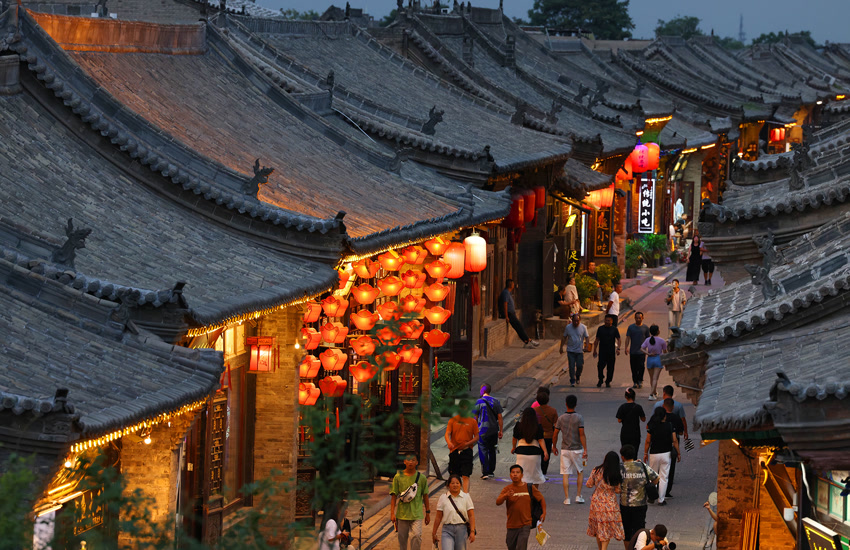
Fly into Harbin Taiping International (HRB) from any major Chinese city (1.5-2 hours from Beijing). Check into a hotel in central Daoli district. Walk Zhongyang Dajie (Central Street) — the 1.4-km cobblestone street with European architecture from the 1900s when Harbin was a Russian railway hub. Visit St. Sophia Cathedral (now a museum). Try Russian-Chinese cuisine — Harbin red sausage, mash, borscht-Chinese-style.
Day 2 — Harbin highlights
Morning at Siberian Tiger Park (Hengdaohezi) — semi-wild enclosure with 1,000+ tigers in a research/conservation setting. Bus tour through enclosed sections. Lunch at a Russian-style restaurant near Zhongyang Dajie. Afternoon at Sun Island Park (across the Songhua River from central Harbin) — sculptures, gardens, riverside walks. Evening: in winter, Ice and Snow World festival (mid-December to late February); in summer, Songhua River cruise.
Day 3 — Yabuli Ski Resort or Songhua River day
Winter option: drive 200 km southeast to Yabuli Ski Resort (China’s largest ski area, 17 slopes, 5 km longest run). Full day skiing or snowboarding.
Summer option: kayaking, hiking, or Songhua River day cruise.
Day 4 — Train north to Mohe
The 8-hour overnight train from Harbin to Mohe (the northernmost city in mainland China). Mohe sits 250 km north of the Arctic Circle equivalent latitude. Visit the Beijicun (北极村) “North Pole Village” — popular for the perpetual-summer-twilight summer-solstice phenomenon and the winter snow-village experience.
Day 5 — Mohe + Arctic experience
Full day exploring the village + nearby forests. Summer: see the world’s longest sunset and brief midnight twilight. Winter: extreme cold (-40°C) but with snow-village atmospheres + occasional aurora-like phenomena (rare). Authentic frontier-town atmosphere.
Day 6 — Return to Harbin via Wudalianchi or Qiqihar
Return south. Optional stop at Wudalianchi (volcanic lake area) or Qiqihar (with the Zhalong Wetland Nature Reserve — millions of migrating cranes in spring and autumn).
Day 7 — Harbin departure or extended stay
Final day in Harbin for souvenir shopping (Russian matryoshka dolls, traditional Chinese fur products, vodka). Visit Confucian Temple. Depart from Harbin Taiping International.
The four seasonal experiences
Winter (December-February)
Heilongjiang’s signature season. Temperatures -25 to -40°C. Heavy snow. Highlights:
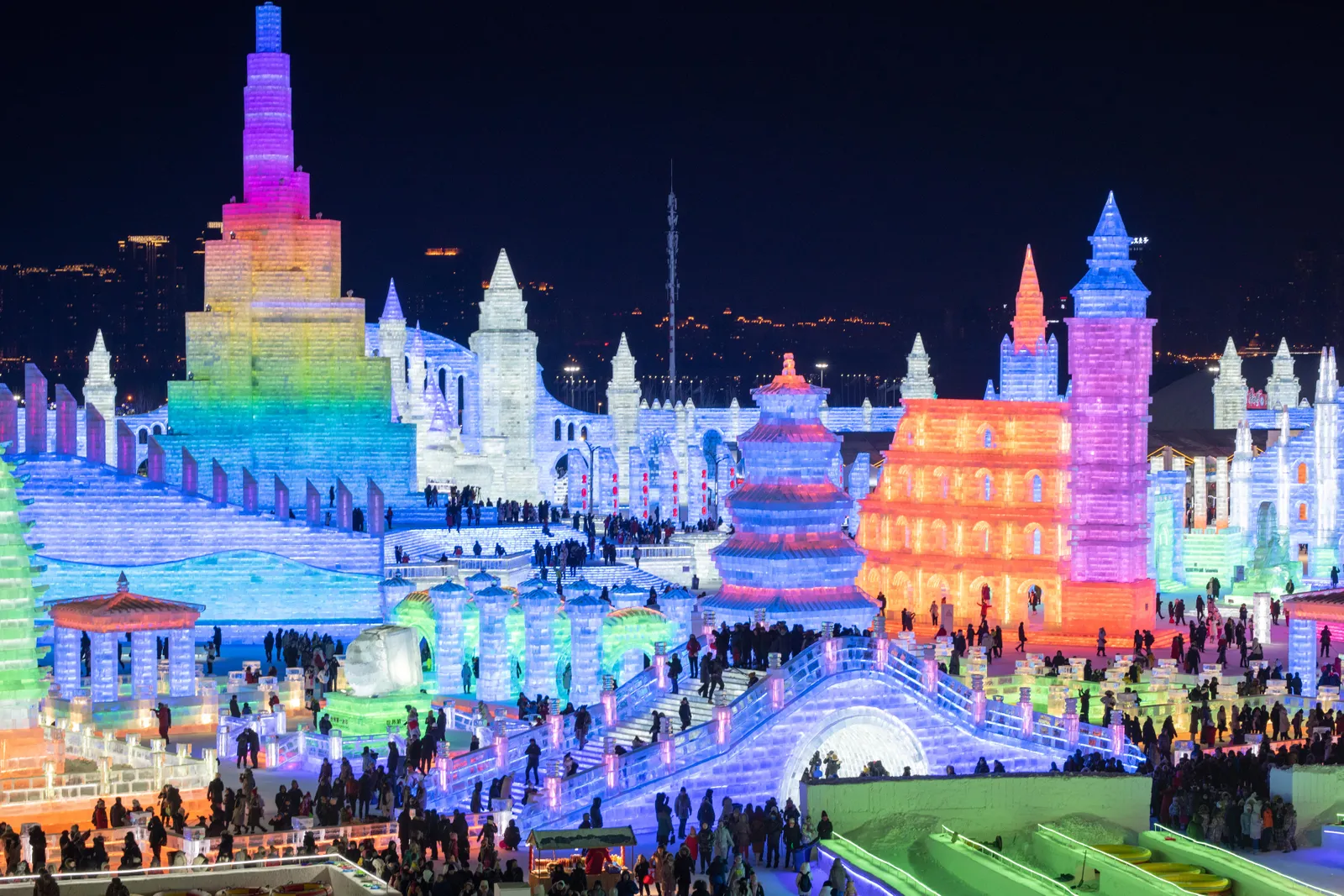
- Harbin Ice and Snow World — the world’s largest ice festival, opening late December. Massive ice sculptures + snow-themed installations, illuminated at night.
- Yabuli ski resort — winter sports + warm-lodge culture.
- Snow Village (Xueqiang) — preserved village with traditional snow-covered wooden houses, especially photogenic at dawn and dusk.
- Songhua River winter sports — ice fishing, ice skating, dog sledding, snow racing.
Spring (April-May)
Crane migration peak at Zhalong wetlands. Cool temperatures (5-15°C). Less-touristed; ideal for birdwatchers.
Summer (June-August)
Cool relief from southern Chinese heat. 18-28°C. Highlights:
- Forest hiking + lake tours in northeastern reserves
- Mohe’s perpetual twilight in late June
- Russian-Chinese border cruises on the Heilong (Amur) River
- Songhua River swimming + summer festivals
- Xingkai Lake — China-Russia border lake
Autumn (September-October)
Foliage peak — northeastern Chinese forest turns gold and red. Wuying National Forest Park is the destination. Comfortable temperatures (10-20°C). Less crowded than southern autumn destinations.
Russian-Chinese border culture
Heilongjiang’s history is inseparable from Russian influence:
- 1898-1917: Russian Chinese Eastern Railway transit hub at Harbin brought 100,000+ Russians to the province.
- 1917 Russian Revolution: White Russian émigrés settled in Harbin, building churches, schools, factories.
- 1950s-1980s: Sino-Soviet alliance period — Heilongjiang became China’s industrial heartland with heavy Russian-style architecture and manufacturing.
- Modern era: Russian-Chinese trade through border crossings (Manzhouli, Heihe); Russian tourism in Harbin; cross-cultural cuisine.
The visible signs: St. Sophia Cathedral (Harbin), Russian-style mansions, Cyrillic-and-Chinese signage in border zones, Russian-flavored cuisine (Harbin-style sausages, breads, vodka cocktails). Harbin’s Russian Bazaar in Tianhe district sells imported Russian goods.
Wildlife + nature
- Siberian tigers: Hengdaohezi Siberian Tiger Park (the world’s largest tiger conservation center, ~1,000 tigers in semi-wild enclosures).
- Red-crowned cranes: Zhalong Wetland Nature Reserve (Asia’s largest crane stopover). Best viewing: April-May and September-October.
- Brown bears: in Greater Khingan Range forests; visible at Hengdaohezi conservation areas.
- Sika deer + boar: Yichun forest reserves.
- Migratory geese, ducks, raptors: Sanjiang Plain wetlands.
Cuisine highlights
- Harbin red sausage — Russian-influenced Chinese sausage; smoky and tender.
- Guo bao rou — sweet-sour deep-fried pork, Heilongjiang specialty.
- Northern dumplings — heavier, larger than southern; pork+sour-cabbage filling is local classic.
- Borscht-Chinese-style — Russian beet soup adapted with Chinese ingredients.
- Wild mushroom dishes — Northeastern forests are mushroom-foraging country.
- Frozen pears (dong li) — frozen-and-thawed pears with sweetened juice; a Northeast Chinese street snack.
- Sun cake (Yueliang gua) — Heilongjiang dessert pastry.
Practical logistics for foreigners
- Getting there: flights to Harbin Taiping (HRB) from Beijing (1.5 hr), Shanghai (3 hr), Guangzhou (4 hr). High-speed rail Beijing-Harbin (5 hr).
- Visa: standard Chinese tourist visa. No special permits for Heilongjiang. Russian border crossings require Russian visa separately.
- Accommodation: international chains (Marriott, Shangri-La) and mid-tier (Hanting, Jinjiang Inn) in Harbin. Yabuli has ski-resort lodges. Mohe has basic guesthouses + a few mid-tier hotels.
- Transport within province: high-speed rail Harbin-Mudanjiang-Mohe limited but expanding. Hire car + driver (¥600-1,200/day) for flexibility.
- Winter clothing: serious -40°C winter clothing essential. Down jackets, insulated boots, thermal layers. Underestimating cold causes injuries every year.
- Payments: WeChat Pay + Alipay universal in cities; cash useful in smaller towns. Foreign cards rarely accepted outside international hotels.
- Language: less English than coastal cities. Russian useful near border. Pleco + Google Translate essential.